Toji Fushiguro: Full Biography & Role in JJK
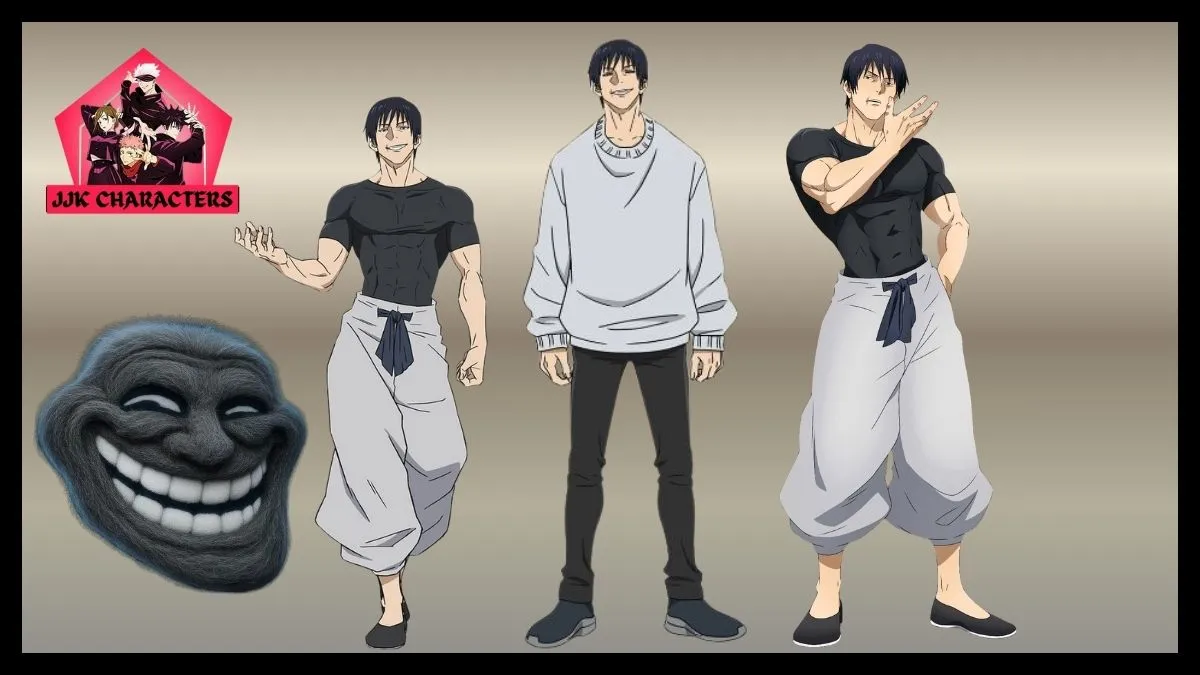
Toji Fushiguro (born Toji Zenin) is Jujutsu Kaisen’s infamous Sorcerer Killer a non‑sorcerer assassin whose Heavenly Restriction trades cursed energy for superhuman physique and a near‑undetectable presence.
Cast out by the Zenin Clan, he exposes the flaws of pedigree‑driven power and decisively shapes the paths of Satoru Gojo and Megumi Fushiguro.
Toji’s Quick Facts Table:
| Attribute | Details |
| Names | Kanji: 伏黒 甚爾 • Rōmaji: Fushiguro Tōji • Birth name: Toji Zenin • Also known as: Sorcerer Killer |
| Status | Deceased • Human (Male) • Birthday: 31 December |
| Affiliations & Role | Former Zenin Clan; independent assassin/mercenary; contracted by Time Vessel Association |
| Relatives | Megumi Fushiguro (son); Tsumiki Fushiguro (step‑daughter) |
| Notable Traits | Heavenly Restriction (zero cursed energy; enhanced physique) → near‑undetectable to sorcerers |
| Signature Tools | Inverted Spear of Heaven, Playful Cloud; storage via “worm‑like” Inventory Curse |
| First Appearance | Manga: Chapter 66 • Anime: Episode 25 |
| Voice Actors | JP: Takehito Koyasu • EN: Nicolas Roye |
| Appearance | Black hair; green/dark‑toned eyes (colour varies by adaptation) |
Who Is Toji Fushiguro?
Toji Fushiguro (born Toji Zenin) is a non‑sorcerer assassin in Jujutsu Kaisen, infamous as the Sorcerer Killer. Born with a Heavenly Restriction that leaves him with virtually no cursed energy, he compensates with superhuman physical ability and an almost undetectable presence.
Despite lacking techniques, he delivers special‑grade‑calibre feats and profoundly alters the paths of Satoru Gojo and Megumi Fushiguro, especially across the Hidden Inventory and Shibuya Incident arcs.
Origins and the Zenin Clan
Raised within the elite Zenin Clan, Toji jjk was ostracized for having zero cursed energy. The clan framed his Heavenly Restriction as a defect, denying him status and protection. That prejudice forged his contempt for jujutsu society’s hereditary elitism.
He walked away from the clan and its values, carving out a life where lineage didn’t matter only stealth, speed and ruthless efficiency.
Relationship to Megumi Fushiguro
After marrying Megumi’s mother, Toji took the Fushiguro surname and briefly found stability. Her death, however, left him embittered and broke; he arranged for Megumi’s future “sale” to the Zenin Clan, valuing cash over clan politics while recognizing the boy’s potential.
Years later, during the Shibuya Incident, Granny Ogami’s Séance Technique summoned Toji.
His overwhelming physique let him break free of control. On realizing the boy before him was Megumi and seeing the Ten Shadows Technique he chose to die by his own hand, preventing harm and breaking the cycle he despised.
In parallel, Satoru Gojo had already moved to safeguard Megumi’s upbringing, tying Toji’s choices directly to both characters’ arcs.
Why He Left the Clan
Toji’s exit from the Zenin Clan was a clear rejection of its inherited hierarchy. Born with a Heavenly Restriction that erased cursed energy, he was ostracized and written off as defective. He left a system that wouldn’t recognize his value and turned to mercenary work, where results not pedigree set his worth.
Marriage brought the Fushiguro surname and brief stability, but it didn’t undo the damage. The break crystallized his anti‑clan stance and paved the way for the Sorcerer Killer persona.
Appearance
Visual design and distinguishing features
- Tall, powerful build with a fighter’s posture.
- Distinctive scar along the right side of his mouth.
- Black hair, worn loose; eyes depicted green in the manga.
- Practical, combat‑ready clothing: fitted tops, flexible trousers, minimal accessories to avoid snags.
- Visual language stands apart from elite sorcerers—no formal robes or clan insignia; he looks like a hunter, not a courtier.
Anime vs. manga portrayal (brief)
MAPPA’s Season 2 leans into colder tones and kinetic motion. The anime renders his eyes a dark blue rather than the manga’s green, sharpening his predatory gaze.
In the Hidden Inventory arc, animation emphasizes acceleration, precision footwork and rapid weapon swaps. During the Shibuya Incident, Granny Ogami’s Séance Technique returns him in a body framed as subtly unnatural paler skin and deeper eye shadows while preserving his imposing silhouette and explosive speed.
Toji JJK’s Personality and Motivations
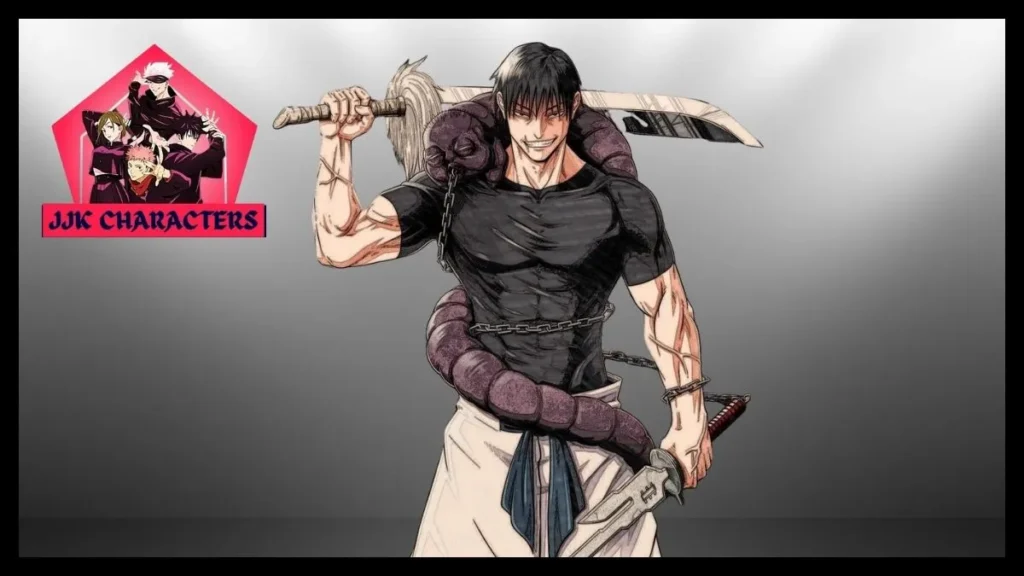
Shaped by Zenin‑clan prejudice and the realities of contract work, Toji Fushiguro operates with cold pragmatism.
He values results over ritual, exploiting ambush, deception and rapid tool‑switches. Even in lethal encounters, he stays composed and sardonic, trading barbed lines with Satoru Gojo while closing in for the kill.
Traits: pragmatic, ruthless, calculating
- Pragmatic: prioritizes the simplest, surest path to victory; ignores “honourable” conventions of sorcerer combat.
- Ruthless: eliminates targets without hesitation (e.g., Riko Amanai) and strikes where defenses are weakest.
- Calculating: scouts’ opponents, manages timing and fatigue, and “outsources” attrition by letting cultists/bounty hunters tire escorts during Hidden Inventory.
- Cool‑headed wit: uses dry banter against Gojo, signaling confidence and psychological control under pressure.
Core motivations
- Money first: cash is validation in a society that dismissed him; his gambling habit underlines that transactional worldview.
- Freedom from clans: rejects elite hierarchies; works as an independent assassin so no family, faction or creed can bind him.
- Anti‑establishment incentives: contracts from the Time Vessel Association pay well and also undermine jujutsu elites—aligning profit with his contempt for their system.
- Residual attachment: despite the above, the bond to Megumi Fushiguro surfaces in the Shibuya Incident, steering his final decision.
Shibuya Incident arc and aftermath
During the Shibuya Incident, Granny Ogami’s Séance Technique rebuilt Toji’s “body information” within a living vessel. The process restored his physique and skills while initially suppressing his conscious personality, leaving instinct and combat habit in charge.
Thanks to the extremes of his Heavenly Restriction, he severed the séance’s control and acted autonomously.
Inside Dagon’s Domain, Horizon of the Captivating Skandha, Toji Fushiguro moved freely and tore through shikigami. After seizing Playful Cloud, he overwhelmed the special grade inside its own territory and exorcised it, underlining his special‑grade‑level threat without cursed techniques.
Confronting Megumi Fushiguro then triggered recognition; on hearing the name and seeing the Ten Shadows Technique, Toji Fushiguro chose self‑termination, cutting short the rampage to prevent his son from inheriting the same cycle he fought to escape.
If you want, I can also reflow any earlier bullet‑heavy section into paragraphs. Send the next heading and paragraph(s), and I will keep everything in clean prose going forward.
Toji JJK’s Impact on the Story and Characters
Toji’s intervention in the Hidden Inventory arc rewired the series’ trajectory. His assassination of Riko Amanai and the temporary killing of Satoru Gojo forced Gojo to awaken Reverse Cursed Technique and refine Hollow Purple, hardening his outlook and cementing his status as the strongest.
Meanwhile, the failed escort and exposure to fanaticism fractured Suguru Geto’s faith in protecting non‑sorcerers, seeding the ideological break that later culminated in his defection.
For Megumi Fushiguro, Toji Fushiguro’s legacy is both burden and catalyst. His final exchange with Gojo revealed Megumi’s impending sale to the Zenin Clan, prompting Gojo to assume guardianship and keep him out of clan politics.
That decision shaped Megumi’s training and wary relationship with jujutsu society, while the weight of inheriting the Ten Shadows Technique under the shadow of the Sorcerer Killer complicates his sense of identity.
Powers and Abilities
Heavenly Restriction (what it gives, what it costs)
Toji’s Heavenly Restriction erases cursed energy entirely, exchanging it for a body pushed to extreme human limits. With no cursed energy signature, he’s effectively invisible to sorcerer sensing hence the “Invisible Man” label and many detection‑keyed veils don’t register him at all.
This stealth pairs with his “worm‑like” Inventory Curse, letting him carry and swap cursed tools without tripping alarms until the moment he draws them.
The trade‑offs are stark. Toji Fushiguro can’t use techniques, domains or Reverse Cursed Technique, and he can’t exorcise curses bare‑handed; he must rely on weapons such as the Inverted Spear of Heaven or Playful Cloud.
He also lacks cursed‑energy reinforcement, so every outcome depends on positioning, timing and raw physiology. Notably, the same extreme condition allowed him to sever control under Granny Ogami’s Séance Technique in Shibuya, restoring full autonomy.
Physical prowess (strength, speed, senses, stamina)
Toji’s strength, speed and coordination comfortably sit in special‑grade territory. He wields Playful Cloud one‑handed and used it to tear through Dagon’s shikigami inside the Domain, even sprinting across water in Horizon of the Captivating Skandha.
Against sorcerers, his acceleration and angle changes create lethal entries; he closed space on Satoru Gojo once Infinity was neutralized and dispatched Suguru Geto after dismantling his spirit output.
His heightened five senses underpin elite tracking and close‑quarters reads. He follows scent, sound and minute shifts in movement rather than cursed energy, letting him anticipate attacks and prey on tells that technique‑reliant sorcerers overlook.
Stamina completes the picture: he chained engagements—Geto’s forces into Gojo—without visible fatigue, only stopping when struck by Hollow Purple.
Tactical intelligence and battle IQ
Beyond raw physicality, Toji’s edge is strategic. He plans around opponents, not ideals, building layered traps and forcing errors rather than testing strength head‑on.
In Hidden Inventory, he used the Time Vessel Association to flood the route with bounty‑driven attackers, burning Satoru Gojo and Suguru Geto’s stamina and attention before striking.
He studied the Six Eyes and Limitless/Infinity, waited for the moment Gojo relaxed his guard, then paired precise timing with the Inverted Spear of Heaven to nullify defenses. Psychological pressure matters as much as weapons: misdirection, tempo shifts and calculated retreat set up his killing entries.
Lack of cursed energy (advantages/disadvantages)
Zero cursed energy defines both Toji’s stealth and his ceiling. Sorcerers trained to read cursed‑energy flow can’t feel him coming, and many sensing wards or veils simply don’t register him, making him the ideal assassin against technique‑reliant targets.
Even the Six Eyes couldn’t anticipate him via energy signals, so he forced Gojo to rely on conventional cues while Toji Fushiguro closed distance on his terms.
The drawbacks are real. He can’t use techniques, domains or Reverse Cursed Technique, and he can’t perceive or exorcise curses without aid. Instead, he reads the world through sharpened sight, sound and touch, and depends on tools carried via the Inventory Curse for supernatural lethality.
This is why his kit spans the Inverted Spear of Heaven, Playful Cloud and other weapons, each chosen for a specific counter.
In Shibuya, Granny Ogami’s Séance Technique rebuilt his “body information” inside a host; the extremity of his Heavenly Restriction then let his body overpower the séance’s control, restoring autonomy rather than granting new powers.
Power scaling vs. sorcerer grades
Despite lacking a formal rank, Toji consistently performs at a special‑grade threshold. In Shibuya, Megumi Fushiguro immediately recognized that his father’s speed and power eclipsed anything he’d seen outside of Satoru Gojo’s presence.
More broadly, commentary around Heavenly Restriction frames Toji as its most extreme case, with physical output that rivals or exceeds special‑grade curses especially against opponents who rely on techniques rather than fundamentals.
The Zenin Clan’s failure to acknowledge that potential is a narrative indictment of jujutsu society’s fixation on inherited techniques. By dismissing a non‑sorcerer who could dismantle sorcerers, they effectively created their own nemesis.
Cursed Tools and “Worm” Inventory
Inventory Curse (how it works; limits)
Toji Fushiguro partners with a worm‑like cursed spirit that functions as a living armoury. He hides it within his body, retrieving or stowing weapons at will, which lets him switch tools mid‑engagement without broadcasting cursed‑energy cues.
The arrangement is essentially transactional: he protects and feeds the spirit; it provides concealed, instant access to an arsenal that would otherwise need a team to carry.
There are constraints. Retrieving or depositing a tool creates a narrow timing window that a sharp opponent can punish. The spirit may also surface to feed on minor curses such as Fly Heads which can compromise stealth if mishandled. Even so, the storage advantage is so decisive that it underpins Toji’s entire assassination style.
Inverted Spear of Heaven (anti‑technique)
The Inverted Spear of Heaven nullifies cursed techniques on contact, making it the perfect foil to Limitless/Infinity. Toji Fushiguro timed his strike when Gojo relaxed his guard, pierced Infinity and turned off the defences that normally render the sorcerer untouchable.
The effect is immediate and absolute while contact lasts, and it can disrupt barriers and complex techniques alike. The spear also pairs with the Chain of a Thousand Miles, allowing kusarigama‑style angles and surprise entries that expand the anti‑technique threat radius.
Crucially, the spear doesn’t erase techniques permanently; Gojo restored his capabilities via Reverse Cursed Technique and answered with Hollow Purple. Even so, the weapon’s rarity and psychological impact shattering confidence in “invincible” defenses make it Toji’s most valuable tool against technique‑centric opponents.
Playful Cloud (three‑section staff)
Playful Cloud is a special grade cursed tool with no imbued technique; it scales purely with the user’s physical strength. That design makes it the ideal match for Toji’s Heavenly Restriction his raw power translates directly into crushing impact, while the three‑section build creates flexible angles and rapid follow‑ups.
In Shibuya, he seized the staff and dismantled Dagon’s shikigami inside the Domain, even sprinting across water in Horizon of the Captivating Skandha, before finishing the special grade. The lack of activation requirements suits Toji’s philosophy: immediate, technique‑agnostic violence delivered through superior timing and execution.
Split Soul Katana
The Split Soul Katana cuts the soul rather than flesh, bypassing physical hardness and rendering many durability‑based defenses moot. Its value lies in how it threatens both curses and toughened sorcerers who rely on reinforcement or natural toughness.
Canon, however, does not depict Toji Fushiguro wielding this blade on‑panel. His confirmed arsenal centres on the Inverted Spear of Heaven, Chain of a Thousand Miles, and Playful Cloud.
The katana remains a useful point of comparison: it embodies the kind of defense‑bypassing lethality that aligns with Toji’s toolkit and intimidation game, forcing opponents to second‑guess their usual safeguards.
Chain of a Thousand Miles
The Chain of a Thousand Miles functions as a range extender that only continues to lengthen whilst a segment remains hidden from view. Toji exploits this rule by keeping portions concealed often via the Inventory Curse so he can launch sudden, long‑range entries without telegraphing intent.
When paired with the Inverted Spear of Heaven, it becomes a kusarigama‑style rig that preserves the spear’s anti‑technique contact while opening angles Gojo and Geto didn’t expect.
The chain isn’t just offensive reach; it’s a movement tool. Toji Fushiguro uses it to alter lines, reel himself into or out of close quarters, and manipulate spacing around obstacles.
The constraint is built in: once exposed, a visible segment stops extending, and the brief beat required to retrieve or stow links can be punished by an alert opponent. Even so, the surprise factor and spatial control make it a staple of his kit.
Other tools and usage patterns
Beyond headline pieces, Toji rotates through conventional weapons—knives, a standard katana, and other low‑profile implements—precisely because they produce no cursed‑energy signature.
That silence complements his Heavenly Restriction, letting him approach targets who rely on sensing and veils. His selection philosophy is surgical rather than flashy: each item fills a role in a wider plan.
The Inverted Spear of Heaven answers techniques, the Chain of a Thousand Miles manages range, and Playful Cloud translates raw strength into immediate damage. Defence‑bypassing blades such as the Split Soul Katana fit this logic conceptually, though canon does not show Toji Fushiguro wielding that katana on‑panel.
What truly elevates the arsenal is tempo control. The Inventory Curse enables rapid, unsignalled swaps mid‑exchange, forcing opponents to hedge against multiple threat types at once.
That uncertainty is the point: while others commit to one style, Toji changes the conversation every few seconds angle, tool, and target until the opening appears.
Major Fights and Feats
vs. Satoru Gojo (setup, tactics, outcome)
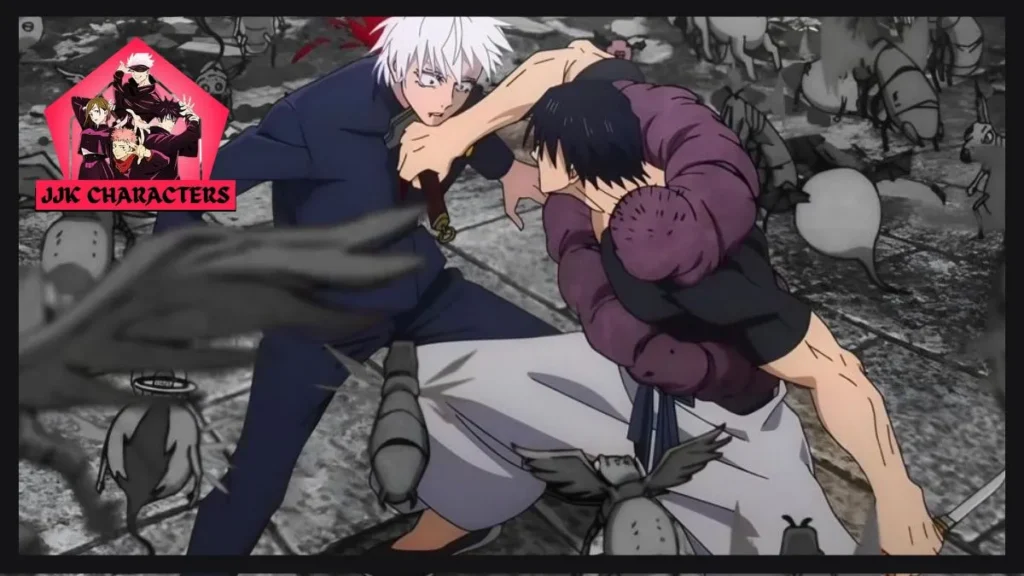
In the Hidden Inventory arc, Toji Fushiguro engineered an escort scenario that drained Satoru Gojo and Suguru Geto before he ever struck. Leveraging the Time Vessel Association’s bounties, he gathered intelligence, tested responses and waited until Gojo let down Infinity.
He then used the Inverted Spear of Heaven to pierce Limitless, leaving Gojo for dead and proving that even “invincible” defences have openings when timing and tool selection are perfect.
The misstep came when he returned to confirm the kill. In the interim, Gojo revived via Reverse Cursed Technique, stabilized Limitless and unveiled Hollow Purple.
The rematch flipped the script: Toji’s preparation and speed couldn’t bridge the new gap in power, and Hollow Purple ended the fight, underlining both Gojo’s evolution and the limits of a technique‑less assassin once a top sorcerer adapts.
vs. Suguru Geto
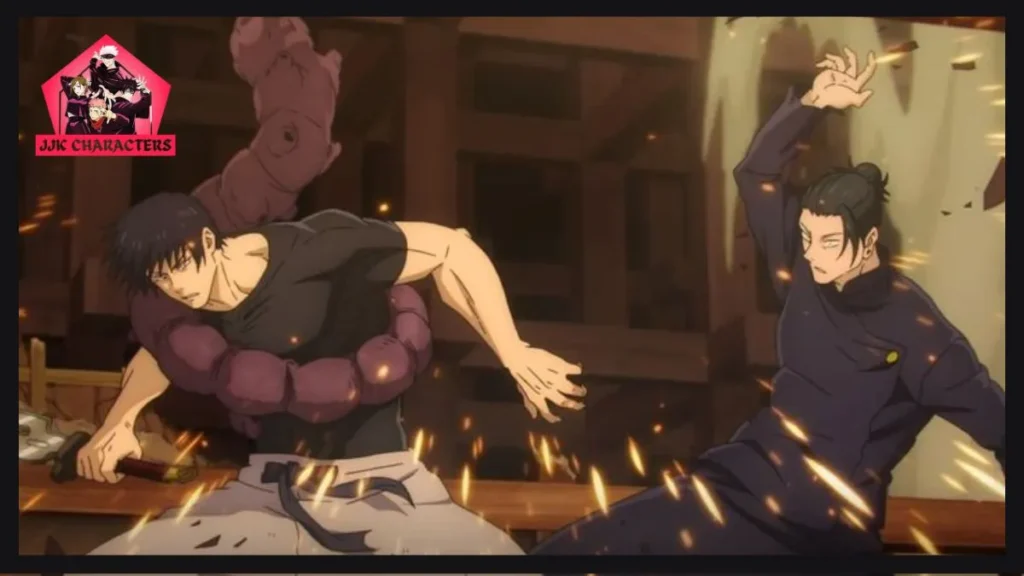
Against Suguru Geto, Toji Fushiguro showcased the other half of his game: overwhelming a curse‑manipulator before layered defenses could form.
He blitzed through a menagerie that included the “Rainbow Dragon” and other powerful spirits (including Imaginary Vengeful Curses), out‑positioned Geto and shut down his output with surgical pressure.
Toji Fushiguro left Geto incapacitated proof that raw pace, angles and weapon swaps can unravel complex sorcery if the operator never gets to set the board.
vs. Dagon
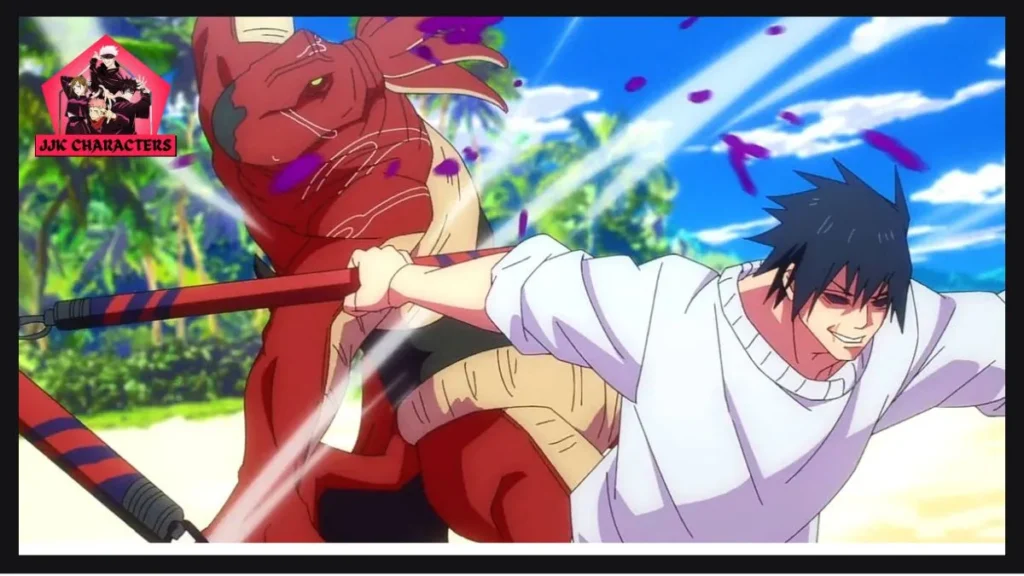
Shibuya provided Toji at full tilt. Entering Dagon’s Domain, Horizon of the Captivating Skandha, he moved with near impunity; the domain’s targeting struggled to calibrate against a fighter with no cursed energy to anchor.
He seized Playful Cloud, ran across the water’s surface, and pulverized shikigami until Dagon fell an exorcism achieved inside a special grade’s own territory, in full view of veterans like Nanami and Maki. It’s the clearest demonstration that Toji’s Heavenly Restriction translates into special‑grade output without techniques.
vs. Megumi Fushiguro
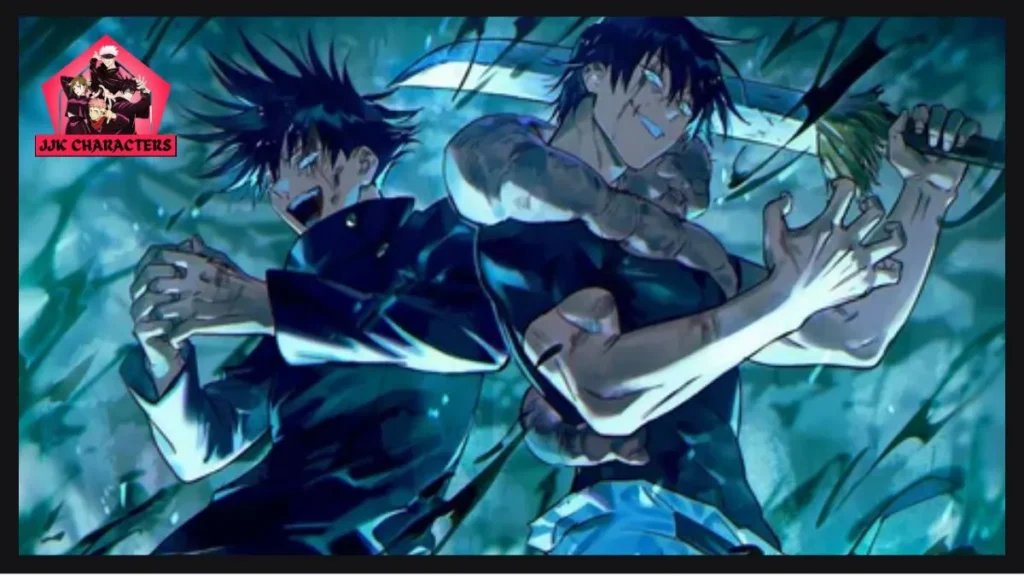
The confrontation with Megumi Fushiguro fused combat and character. Reanimated by Granny Ogami’s Séance Technique, Toji Fushiguro initially acted on instinct alone. Recognition dawned when he saw the Ten Shadows Technique and heard Megumi’s name; autonomy returned and the assassin chose self‑termination, ending the fight on his terms.
Megumi’s read of the encounter—acknowledging a decisive gap in speed and power—doubles as a verdict on Toji’s ceiling and the legacy the son must navigate.
Other Notable Encounters
During Hidden Inventory, Toji leveraged the Time Vessel Association’s bounty scheme to keep pressure on the escort team, then completed the objective that mattered: the assassination of Riko Amanai. It’s a bleak moment, but it captures his method finish the contract with precision, sentiment aside.
In Shibuya, his brief clash with Takuma Ino underlined the gulf between Toji Fushiguro and capable sorcerers. The exchange ended almost as soon as it began; Toji’s acceleration and angle changes erased any chance for a structured defense, showing how his technique‑agnostic pressure overwhelms opponents before they can respond.
Relationships
Megumi Fushiguro (themes of fatherhood and legacy)
Toji’s lowest point came when he arranged Megumi Fushiguro’s future sale to the Zenin Clan, choosing immediate cash over his son’s security. Yet his marriage to Megumi’s mother and adopting the Fushiguro surname hinted at the father he might have been.
That influence lingers through to Shibuya, where recognition of the boy and the Ten Shadows Technique cuts through the assassin’s conditioning.
Satoru Gojo’s guardianship traces directly to Toji Fushiguro’s final admission about Megumi during Hidden Inventory. Gojo stepped in to keep Megumi out of Zenin politics, shaping his training and outlook while insulating him from the clan’s cycles of control.
The legacy is complicated: Megumi inherits power and a surname chosen in love, but he also carries the shadow of the Sorcerer Killer.
In the Shibuya Incident, Toji Fushiguroends the cycle himself. Regaining autonomy, he chooses self‑termination rather than risk harming Megumi. His parting relief that the boy hadn’t taken the Zenin name reads as a final, unambiguous act of protection.
Satoru Gojo (rivalry, respect, turning points)
The Toji–Satoru Gojo rivalry defines a turning point for both men. Toji’s first victory killing Gojo temporarily and assassinating Riko Amanai forced Gojo to awaken Reverse Cursed Technique and refine Hollow Purple, transforming him from prodigy to the strongest.
Their rematch then exposed Toji’s ceiling: preparation and speed can’t bridge a foe who has fundamentally retooled mid‑crisis.
Respect survives the bloodshed. Gojo honours Toji’s final request regarding Megumi, recognizing the love buried beneath years of mercenary living.
In turn, Gojo’s later teaching philosophy and fierce protection of his students trace back to the harsh lessons of Hidden Inventory—proof that their encounters reshaped how both men relate to jujutsu society.
Zenin Clan (conflict with jujutsu society)
Toji’s history with the Zenin Clan reads as a critique of jujutsu society’s pedigree fetish. Branded a failure for having no cursed energy, he was treated as disposable rather than recognized as an extreme case of Heavenly Restriction.
That neglect forged the outsider who later dismantled technique‑reliant sorcerers as the Sorcerer Killer a result that exposes how a rigid hierarchy can’t see power unless it looks inherited.
The clan’s later move to reclaim Megumi Fushiguro under the Zenin name shows the lesson wasn’t learned. Their fixation on bloodline techniques ignored the point that strength can manifest outside inherited curses.
In narrative terms, Toji’s rebellion and Megumi’s path under a different surname stand as a rebuke to a system that confuses lineage with worth.
Clients and allies (Time Vessel Association, etc.)
Toji kept his professional world strictly transactional. The Time Vessel Association valued a contractor who could reach targets ordinary assassins couldn’t, and he in turn used their resources to gather intelligence and structure the Hidden Inventory operation on his terms.
Intermediaries such as Shiu Kong illustrate how he navigated the cursed‑tool black market, securing rare items like the Inverted Spear of Heaven. Defence‑bypassing blades such as the Split Soul Katana fit his philosophy, though canon doesn’t show Toji Fushiguro using that katana on‑panel.
Loyalty never entered the equation. He completed contracts, took payment and moved on, guided by money, freedom and disdain for clan politics rather than any client’s cause. That distance is part of why his plans worked: fewer attachments, cleaner decisions, and the right tool for the job every time.
Themes and Analysis
Outsider to the jujutsu order — power without cursed energy
Toji embodies a direct challenge to jujutsu society’s assumptions about merit and strength. His Heavenly Restriction removes cursed energy entirely yet produces special‑grade‑tier output through raw physiology, timing and tools. That paradox exposes how institutions that worship inherited techniques overlook alternative paths to power.
The Zenin Clan treated him as defective, but as the Sorcerer Killer he dismantled technique‑reliant elites: in Hidden Inventory he timed the Inverted Spear of Heaven to pierce Infinity, and in Shibuya he seized Playful Cloud and exorcised Dagon inside its Domain.
The pattern is consistent fundamentals; preparation and a covert Inventory Curse outmanoeuvre lineage and orthodoxy making Toji Fushiguro a living critique of a hierarchy that mistakes pedigree for capability.
Breaking cycles vs. perpetuating them
Toji’s story turns on whether trauma dictates destiny. Abuse within the Zenin system curdled into the choices that defined him contract killing, gambling, and the planned “sale” of Megumi Fushiguro all hallmarks of a cycle set to repeat.
Yet his marriage and the Fushiguro surname hinted at a different route, and the Shibuya Incident forced the decision: on recognizing Megumi and seeing the Ten Shadows Technique, he ended his own reanimated rampage to protect his son from the same inheritance.
In parallel, Satoru Gojo’s guardianship diverted Megumi from clan politics, proving cycles can break when care and structure replace neglect. Toji’s arc functions as both warning and proof of possibility—damage shapes him, but it doesn’t get the final word.
How Toji Reshapes Megumi’s Arc and Gojo’s Perspective
Toji’s shadow defines key choices for both Megumi Fushiguro and Satoru Gojo. For Megumi, the legacy of the Sorcerer Killer creates a persistent tension between admiration for strength and revulsion at the methods that earned that title.
Under Gojo’s guardianship, Megumi learns to treat the Ten Shadows Technique as a tool for protection rather than revenge, turning a lineage that once enabled exploitation into a means of safeguarding others.
Gojo’s role emerges directly from his final exchange with Toji Fushiguro in Hidden Inventory. Having seen how neglect and clan politics deform people, Gojo steps in to keep Megumi out of the Zenin Clan’s orbit, shaping a teaching style that couples freedom with protection.
His later approach—give students space to choose whilst insulating them from the systems that produce radicals—reflects lessons drawn from both Toji and Suguru Geto. In that sense, Toji Fushiguro reframes Gojo’s mission: it isn’t only about power; it’s about preventing isolation from curdling into violence.
The contrast is stark but instructive. Toji’s isolation and trauma led to transactional living and moral collapse; Megumi’s mentorship and bonds provide an alternative path. The result is a thematic mirror: the same inheritance can either perpetuate harm or break cycles, depending on the guidance that surrounds it.
Quotes — memorable lines
“Megumi. My kid’s name.”
Hidden Inventory. Toji identifies his son to Gojo, the admission that sets up Gojo’s guardianship and anchors Megumi’s future outside Zenin control.
I’m not a sorcerer — I’m a sorcerer killer.
Hidden Inventory (wording varies by translation). A clear statement of identity and rejection of jujutsu hierarchy, delivered at the moment his tactics and tools neutralise “invincible” defences.
“Fushiguro… good.” / “It’s fine to be selfish.”
Shibuya Incident (translations vary). Recognition and relief when Toji realises Megumi didn’t take the Zenin name, followed by advice that counters the self‑erasure that defined his own life.
Context and Why They Matter
These lines expose the tenderness beneath Toji’s ruthless exterior. His relief at hearing the name Fushiguro acknowledges how identity shapes destiny, and his advice that it’s fine to be selfish reframes survival as setting boundaries rather than surrendering to clan obligations.
In moments otherwise dominated by tactics and sardonic asides, this glimpse of paternal concern humanises a figure famed for clinical efficiency.
Their impact rests on rarity. Toji usually speaks in terse assessments or mocking put‑downs; when he asks about Megumi Fushiguro and rejects the Zenin Clan name, it lands with the weight of a confession.
The juxtaposition an assassin capable of killing the Star Plasma Vessel who still worries about his son’s future sharpens the tragedy of a man built by violence trying, at the end, to break its hold.
Trivia and Facts
Name/romanisation notes
Toji’s name appears as 伏黒 甚爾 (Fushiguro Tōji). The kanji 甚 can denote extreme or “intense”, while 爾 carries archaic senses like “you/that”; together, they suit a character defined by extremes. The shift from Toji Zenin to Toji Fushiguro signals a conscious rejection of hereditary identity in favour of chosen bonds.
Sorcerer Killer (術師殺し, jutsushi‑goroshi) becomes the title that follows him through the underworld, encapsulating both his methods and his stance against jujutsu orthodoxy.
Design inspirations and creator notes
Design choices foreground Toji as an outsider: casual, functional clothing rather than formal robes; an unkempt silhouette that reads more hunter than aristocrat; and the mouth‑scar that undercuts any easy charm.
The scar doubles as lived history and visual asymmetry, making rare, softer expressions cut deeper. In animation, MAPPA’s Season 2 leans into fluid, grounded motion—clean acceleration, abrupt angle changes, seamless weapon swaps and shifts his eye colour toward a darker blue, heightening the predatory edge without breaking realism.
Production tidbits
In Japanese, Takehito Koyasu layers gravelly authority with dry wit, letting small inflections sell both menace and fleeting vulnerability. In English, Nicolas Roye tracks the same balance, keeping Toji’s pragmatism front and centre while letting paternal beats register without sentimentality.
Popularity polls have repeatedly placed Toji Fushiguro highly despite limited screen time, a reflection of how decisively his presence reshapes both plot and theme.
Toji Fushiguro’s References
Jujutsu Kaisen Manga
- Chapter 65–75 (Hidden Inventory Arc): Toji’s formal introduction as the primary antagonist of the arc. Details his infiltration into the Time Vessel Association, contract to assassinate Riko Amanai, and first battle with Satoru Gojo.
- Chapter 72–74: Pivotal clash against Gojo and Geto, showcasing his Heavenly Restriction, mastery of cursed tools, and his eventual death at Gojo’s hands.
- Chapter 111–113 (Shibuya Incident Arc): Toji’s resurrection through Ogami’s Séance Technique. Depicts his rampage against Dagon and his overwhelming physical prowess.
- Chapter 113–114: Emotional resolution where Toji Fushiguro recognises Megumi during their fight, leading him to end his own life rather than harm his son.
- Chapter 119 (Shibuya Aftermath): Confirmation of Toji’s role in shaping Megumi’s growth and sorcerer path, discussed by other characters post-battle.
- Chapter 136 (Shibuya Incident Epilogue): Indirect mentions of Toji’s lingering influence as part of the wider legacy affecting Megumi and the Zenin Clan.
Jujutsu Kaisen Anime
- Episode 25–29 (Season 2, Hidden Inventory Arc): Toji’s animated debut, introducing his contract with the Time Vessel Association, his deadly skills, and fight sequences with Gojo and Geto.
- Episode 28–29: The climactic fight against Gojo, adapted with expanded choreography and emotional tension, culminating in Toji’s defeat.
- Episode 40–41 (Shibuya Incident Arc): Toji’s reanimation by Ogami and his destructive battle against Dagon, showcasing his overwhelming power compared to other sorcerers.
- Episode 41–42: His recognition of Megumi during their confrontation, followed by his self-inflicted death, marking his second and final exit from the story.
Jujutsu Kaisen Official Fanbook (2021)
- Provides a detailed character profile including height, weight, abilities, and Heavenly Restriction.
- Notes on his background as a Zenin Clan outcast due to his lack of cursed energy, and insights into his resentment toward jujutsu society.
- Commentary on his relationship with Megumi and the decision to sell him to the Zenin Clan, highlighting Toji’s complex morality.
- Creator insights about Toji’s design as an “anti-sorcerer” and his intended role as Gojo’s greatest physical counterbalance.
Gege Akutami Interviews (Weekly Shonen Jump)
- Discussion of Toji as a narrative foil to Gojo, representing pure physical strength versus limitless cursed energy.
- Clarification that Toji’s reanimation in Shibuya was designed as both fan service and emotional closure for Megumi’s arc.
- Creator commentary on Toji’s “sorcerer killer” archetype and his influence on Megumi’s potential future.
- Notes on design choices: his scar, casual attire, and his “predatory aura” compared to other characters.
Additional Canonical Sources
Jujutsu Kaisen Character Book: Provides extended data on Toji’s abilities, Zenin Clan family tree, and his estranged connection to Megumi.
Weekly Shonen Jump Issue Covers (2019–2021): Promotional spreads featuring Toji Fushiguro alongside Gojo and Geto during the Hidden Inventory arc promotions.
Anime Production Notes: Voice acting guidance for Takehito Koyasu (JP) and Nicholas Roye (EN), highlighting Toji’s cold yet charismatic presence.
Supplementary Materials (Blu-ray Booklets & MAPPA Extras): Behind-the-scenes commentary on Toji’s fight animation sequences and the decision to exaggerate his physicality to emphasize the Heavenly Restriction concept.
Navigation
Megumi Fushiguro Complete Biography & Power Guide
Tsumiki Fushiguro: Full Biography & Role in JJK
Frequently Asked Questions
Why Does Toji Hate Gojo?
Toji resents Gojo for representing the inherited power and privilege of jujutsu society, but later shows grudging respect when entrusting Megumi to him.
Who Was Toji Killed By?
Satoru Gojo killed Toji during their rematch in the Hidden Inventory arc with Hollow Purple.
Who Is Toji’s Wife?
Her name is never revealed, but she deeply influenced Toji Fushiguro, and her death pushed him into darker choices.
Does Toji Have a Brother?
No siblings are confirmed in the series; his clan ties were severed due to discrimination.
Why Did Toji Kill Himself?
In Shibuya, Toji ended his reanimated life after recognizing Megumi, choosing love over violence.
How Tall Is Toji JJK?
Toji stands about 188 cm (6’2″), making him one of the tallest fighters.
How Old Is Toji?
He was around 32 years old at his death in the Hidden Inventory arc.
Why Did Toji Kill Riko?
He assassinated Riko Amanai under contract with the Time Vessel Association for money, not personal reasons.
Conclusion
Toji Fushiguro stands as one of Jujutsu Kaisen’s most consequential figures: a bruising critique of pedigree‑driven power and a study in whether cycles can be broken. His path from abused Zenin Clan outcast to the Sorcerer Killer and, finally, a father who chooses sacrifice shows how love, loss and agency can redirect even the hardest lives.
The Hidden Inventory and Shibuya Incident arcs frame that journey: he shatters complacency, forces reckonings, and then uses his last choice to protect what matters.
His Heavenly Restriction is both engine and metaphor: literal strength born from the very absence society deems essential. The clan that dismissed him created its own nemesis; the teacher he wounded, Satoru Gojo, reshaped his mission; and his son, Megumi Fushiguro, inherits a legacy that argues for guidance over bloodline.
Toji’s story warns against institutional blindness and affirms that cycles of harm can be interrupted—an enduring testament to Gege Akutami’s flair for morally complex characters who move both plot and theme.