Kento Nanami: Complete Biography
Kento Nanami stands as one of the most compelling and tragically heroic figures in Jujutsu Kaisen, representing the archetype of the reluctant professional who finds purpose through duty rather than passion.
As a Grade 1 Jujutsu Sorcerer affiliated with Tokyo Jujutsu High, Nanami brings a unique perspective to the jujutsu world that of an ex-salaryman who understands both civilian struggles and supernatural responsibilities.
His character embodies the tension between ordinary life and sorcerer culture, creating a bridge between these worlds that few other characters can provide.
Unlike the more flamboyant personalities that populate the series, Nanami approaches jujutsu work with methodical professionalism, treating curse exorcism as a job requiring expertise rather than heroic grandstanding.
This pragmatic outlook, combined with his role as mentor to Yuji Itadori, establishes him as a stabilizing force within the chaotic world of jujutsu society.
His ability to maintain the balance of civilian and jujutsu life while excelling in both spheres makes him particularly relatable to adult audiences who recognize the weight of professional responsibility.
Nanami’s significance extends beyond his combat capabilities to encompass his function as a moral compass within a profession often characterized by moral ambiguity.
His unwavering commitment to protecting civilians and his refusal to compromise his principles, even when facing overwhelming odds, creates a character whose heroism stems from consistency rather than dramatic gestures.
📋 Character Overview Table :
| Attribute | Details |
| Full Name | Kento Nanami |
| Kanji | 七海建人 |
| Romaji | Nanami Kento |
| Date of Birth | July 3 |
| Age at Death | 28 |
| Height | 184 cm (6’0″) |
| Sorcerer Grade | Grade 1 |
| Affiliation | Tokyo Jujutsu High |
| Former Occupation | Office Worker (Salaryman) |
| Cursed Technique | Ratio Technique (7:3 Weak Point Targeting) |
| Weapon of Choice | Cursed-Grade Sword |
| Debut | Chapter 10 (Manga) / Episode 8 (Anime) |
| Voice Actors | Kenjirō Tsuda (JP), David Vincent (EN) |
| Current Status | Deceased |
Background and Origins
Early Life and Career
Before entering the jujutsu world, Kento Nanami lived the archetypal civilian life of a Japanese office worker, experiencing firsthand the soul-crushing routine that defines modern corporate culture.
His office job burnout wasn’t merely professional dissatisfaction but a profound disillusionment with a system that prioritized productivity over human dignity. This period of his life exemplified the stuck-in-the-system mindset that traps countless individuals in unfulfilling careers, making his eventual transition all the more meaningful.
The contrast between real-world vs cursed world pressures shaped his unique perspective on both spheres. While most jujutsu sorcerers grow up within the supernatural community, Nanami’s adult entry provided him with comparative context that few of his colleagues possess.
His corporate experience taught him valuable lessons about efficiency, time management, and professional conduct that would later inform his approach to jujutsu work.
This background also instilled in him a deep appreciation for the struggles of ordinary people, creating empathy that influences his protective instincts throughout his sorcerer career.
Unlike those born into jujutsu families, Kento Nanami never takes civilian normalcy for granted, understanding its value precisely because he chose to abandon it.
Why Nanami Became a Jujutsu Sorcerer
The catalyst for Nanami’s career change came through the tragic death of coworker Yu Haidara during their shared time as jujutsu students.
This loss, combined with his growing disillusionment with modern society, created a crisis that forced him to reevaluate his priorities and life direction. The overwork metaphor that defines much of his character begins here his recognition that both corporate and jujutsu worlds demand excessive sacrifice, but only one offers meaningful purpose.
His transition into sorcery out of purpose rather than obligation distinguishes him from many colleagues who inherit their roles through family tradition or circumstance. Kento Nanami actively chose the jujutsu path after experiencing its alternative, making his commitment more deliberate and philosophically grounded.
This conscious decision explains his professional approach to sorcery treating it as meaningful work rather than destiny or calling.
The death of his friend also established the foundation for his protective instincts and his particular sensitivity to loss, themes that would define his relationships with younger sorcerers like Yuji Isadora.
His understanding that jujutsu work inevitably involves sacrifice makes him both more cautious and more determined to minimize unnecessary casualties.
Appearance
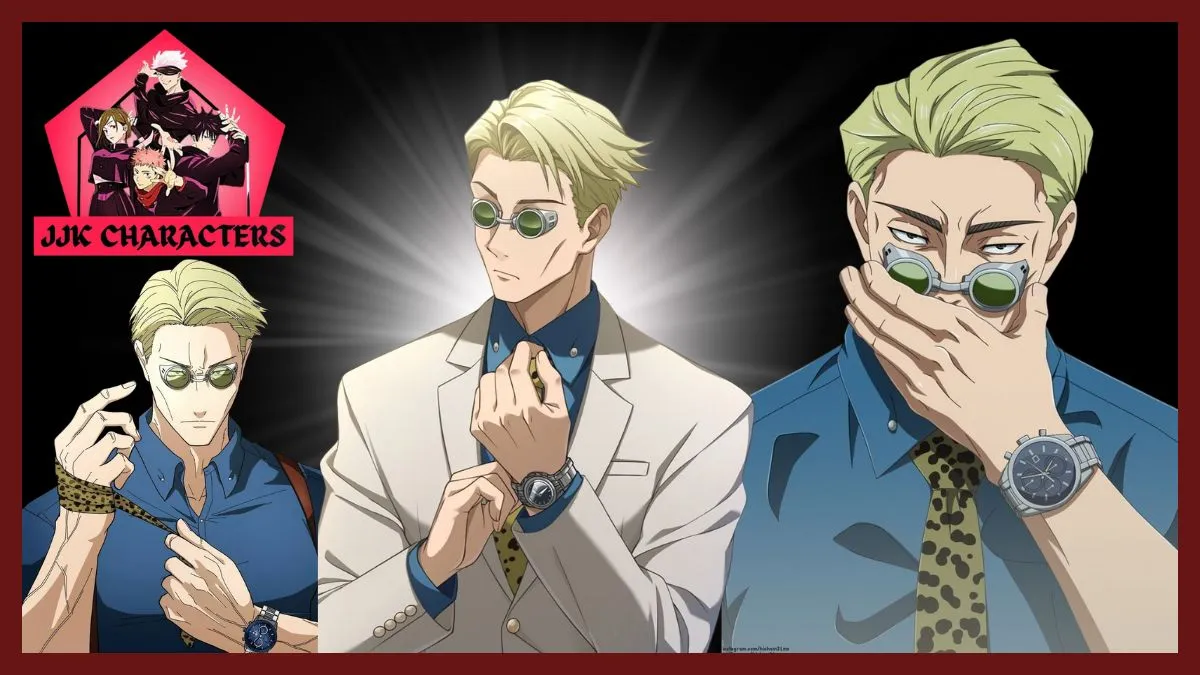
Nanami’s visual design immediately communicates his professional background and methodical personality. His signature distinct suit and tie sets him apart from the more casual or traditional attire favored by other sorcerers, creating an instantly recognizable silhouette that reinforces his corporate origins.
During combat situations, his battle outfit features his tie wrapped around his head—a practical adaptation that transforms a symbol of office conformity into functional combat gear.
His blonde hair and square glasses contribute to his scholarly, analytical appearance, suggesting intelligence and precision rather than raw power. The calm, neat style he maintains contrasts rougher sorcerers like Gojo & Yuji, establishing him as the adult professional among more charismatic but less disciplined colleagues.
This visual distinction reinforces his role as the responsible mentor figure who brings order to chaotic situations.
Even his posture and movement patterns reflect his background—controlled, efficient gestures that waste no energy on unnecessary flourishes. This physical restraint mirrors his emotional control and tactical approach to combat, creating visual consistency that supports his character themes.
Personality and Philosophy

Core Traits: Stoicism and Efficiency
Nanami’s personality centers around his commitment to efficiency and emotional restraint. He doesn’t waste time or words, approaching both conversation and combat with the same methodical precision that characterized his corporate career.
His frequent use of sarcasm provides emotional release while maintaining professional distance, allowing him to express frustration without compromising his composed exterior.
His professional mindset extends beyond mere work habits to encompass a comprehensive worldview that values competence, reliability, and results over style or recognition.
This belief in system/order sometimes puts him at odds with more intuitive colleagues, but it also makes him invaluable in crisis situations requiring clear thinking and decisive action.
The stoicism that defines his public persona serves both as strength and limitation—enabling him to function effectively under pressure while potentially isolating him from deeper emotional connections.
His efficiency-focused approach to life reflects both his corporate training and his recognition that jujutsu work demands maximum effectiveness to minimize casualties.
Belief System and Moral Code
Kento Nanami operates according to a rigid moral framework that prioritizes civilian protection above all other considerations. His refusal to harm innocents remains absolute regardless of tactical advantages such actions might provide, establishing clear boundaries that guide his decision-making even in desperate situations.
This sharp sense of right/wrong creates both strength and vulnerability—providing moral clarity while potentially limiting strategic options.
His won’t tolerate corrupted sorcerer’s stance extends beyond mere professional disagreement to encompass fundamental philosophical opposition to those who abuse their power.
This moral inflexibility sometimes creates tension with colleagues who favor more pragmatic approaches, but it also establishes him as a trustworthy figure whose principles remain consistent regardless of circumstances.
The moral code that guides his actions stems partly from his civilian background and partly from his experiences with loss within the jujutsu community.
Having seen both worlds, he understands the value of the protection jujutsu sorcerers provide and refuses to compromise the integrity of that mission through moral shortcuts.
Inner Conflict and Human Side
Beneath his composed exterior, Kento Nanami struggles with quiet emotion that he rarely allows others to witness. The burden of responsibility he carries both for mission success and subordinate safety creates constant internal pressure that manifests as his characteristic bone deep fatigue.
This exhaustion isn’t merely physical but encompasses the emotional toll of maintaining professional standards while processing personal losses.
The ongoing tension between sense of duty vs self-care defines much of his internal conflict. His commitment to protecting others often comes at the expense of his own wellbeing, creating a sustainable pattern that ultimately contributes to his tragic fate.
This self-sacrificial tendency, while admirable, also represents a form of self-destruction that mirrors the corporate burnout he originally sought to escape.
His human side emerges most clearly in his interactions with Yuji Itadori, where his protective instincts override his professional detachment. These moments reveal the depth of emotion he typically suppresses, showing that his stoicism serves as armor rather than genuine indifference.
Relationships

Nanami and Yuji Itadori
The relationship between Kento Nanami and Yuji represents one of the series’ most emotionally resonant mentor-student dynamics. Their protective bond develops rapidly due to Nanami’s recognition of Yuji’s potential and vulnerability within the dangerous jjk world.
The calm vs chaos dynamic between them creates natural balance his methodical approach complementing Yuji’s intuitive fighting style.
His father-ish energy towards Yuji stems partly from his own experiences with loss and partly from his recognition of the young sorcerer’s need for guidance. Unlike other mentors who focus primarily on power development.
Nanami Kentoemphasizes survival skills and moral grounding, understanding that Yuji’s greatest challenges will be psychological rather than technical.
The direct post-Shibuya parallel where Kento Nanami tells Yuji You are strong represents the culmination of their relationship a final affirmation that transcends mere combat ability to encompass moral strength and character.
This moment encapsulates his role as the mentor who validates worth through recognition rather than criticism.
Bond with Yu Haibara
Yu Haibara, Nanami’s classmate during his student days at Tokyo Jujutsu High, played a quiet yet pivotal role in shaping Nanami’s path. Haibara’s optimism and friendly nature contrasted with Nanami’s reserved personality, creating a complementary dynamic between the two.
Tragically, Haibara’s death during a mission became the emotional turning point that pushed Nanami away from sorcery and into the corporate world.
This loss not only deepened his understanding of the dangers young sorcerers face but also fueled his protective instincts toward future juniors like Yuji Itadori. For Nanami, Haibara’s memory remained a silent motivator a reminder of the human cost of their profession.
Bond with Gojo
The relationship between Kento Nanami and Satoru Gojo exemplifies professional respect tempered by fundamental personality differences. Their dynamic features trust with distance Kento Nanami acknowledges Gojo’s exceptional abilities while maintaining reservations about his methods and attitude.
This mutual respect operates on a purely professional level, with both recognizing the other’s competence despite their contrasting approaches to jujutsu work.
Nanami dislikes Gojo’s flamboyance, finding his casual attitude towards serious situations both unprofessional and potentially dangerous. However, this disapproval doesn’t prevent effective collaboration when circumstances demand it.
They work complementary during crisis situations, with his methodical planning balancing Gojo’s improvisational tendencies to create surprisingly effective tactical combinations.
Their relationship also highlights the generational and philosophical divide within jujutsu society Gojo representing inherited power and natural talent, while Kento Nanami embodies earned expertise and disciplined development.
This contrast creates productive tension that benefits both characters and the missions they undertake together.
Allies in the JJK World
Within the broader jujutsu community, Nanami maintains professional relationships characterized by competence and reliability.
His connection with Shoko Ieiri reflects mutual respect between professionals who understand the weight of their responsibilities both dealing with the aftermath of jujutsu conflicts in their respective specialties.
Their interactions demonstrate the quiet camaraderie that develops between experienced practitioners who’ve witnessed the profession’s costs firsthand.
Among Grade 2s at HQ and other operational sorcerers, he known as dependable the ideal pro-level sorcerer who consistently delivers results without creating additional complications.
This reputation makes him a preferred partner for complex missions requiring coordination and precision rather than raw power. His ability to work effectively with various personality types stems from his corporate background, where team collaboration was essential for project success.
Abilities and Powers
Overview
Nanami’s combat effectiveness stems from his approach as a strategic fighter who prioritizes efficiency > power in all tactical decisions.
Unlike sorcerers who rely on overwhelming force or elaborate techniques, Kento Nanami achieves superior results through logic-driven execution that maximizes impact while minimizing energy expenditure.
This methodology reflects both his analytical nature and his understanding that sustainable combat effectiveness requires resource management.
His fighting style demonstrates how technical precision can overcome raw power advantages, making him particularly effective against opponents who rely on brute force or emotional fighting.
The systematic approach he brings to combat situations often creates opportunities that more intuitive fighters might miss, establishing him as a valuable asset in both solo and team scenarios.
Physical Prowess
Despite his professional appearance, Kento Nanami possesses exceptional physical capabilities that enable him to compete with supernatural opponents. His heavy strikes deliver devastating impact through precise application of force rather than wild swinging, demonstrating the efficiency principles that guide all his actions.
This controlled power application allows him to maintain effectiveness throughout extended engagements without exhausting himself prematurely.
His mastery of perfect distancing enables him to control engagement ranges optimally, keeping opponents within his effective striking zone while avoiding their strongest attacks.
This spatial awareness, combined with his enhanced endurance, allows him to sustain combat performance even when facing multiple opponents or prolonged confrontations. His physical conditioning reflects the same methodical approach he applies to all aspects of his life—systematic development rather than natural talent.
Tactical Intelligence
Nanami’s greatest combat asset lies in his exceptional analytical capabilities, enabling him to perform complex battlefield calculations while maintaining combat effectiveness.
His ability to manage multiple threats at once stems from his systematic approach to problem-solving, breaking complex situations into manageable components that can be addressed sequentially or simultaneously as circumstances require.
His tactical intelligence extends to team coordination, where he frequently sets combos for allies by creating openings or positioning advantages that less experienced fighters can exploit.
This collaborative approach maximizes overall team effectiveness while minimizing individual risk, reflecting his protective instincts and professional understanding of resource optimization.
Cursed Energy Control
Kento Nanami demonstrates exceptional cursed energy management, achieving the rare feat of Black Flash through his precise control and timing. His enhanced attacks through cursed energy reinforcement showcase technical mastery that amplifies his physical capabilities without wasteful energy expenditure.
The crisp cursed flow he maintains during combat reflects years of disciplined practice and his systematic approach to skill development.
His cursed energy application follows the same efficiency principles that guide his other abilities—maximum effect through minimum expenditure.
This controlled approach allows him to maintain peak performance throughout extended missions while retaining energy reserves for critical moments when overwhelming force becomes necessary.
Cursed Technique – Ratio Technique
Nanami’s signature ability, the Ratio Technique, represents the perfect fusion of mathematical precision and combat instinct. The technique creates a 7:3 weak point split on any target, automatically identifying and highlighting the optimal strike location for maximum damage.
This auto-targets vitals through cursed overlay eliminates guesswork from combat, allowing Kento Nanami to deliver consistently devastating attacks regardless of opponent type or defensive capabilities.
The technique’s enhanced damage potential stems from its ability to bypass conventional durability by targeting structural weak points rather than attempting to overwhelm defenses through raw force.
This perfect mix of math + instinct exemplifies his character combining analytical thinking with practical application to achieve superior results through technical excellence rather than brute power.
Equipment
Nanami’s equipment selection reflects his professional background and practical approach to combat. His cursed-grade blade serves as his primary weapon, chosen for reliability and effectiveness rather than dramatic appearance.
The blade’s design prioritizes function over form, enabling precise cuts that complement his Ratio Technique’s weak point targeting.
His continued use of business clothes during combat situations serves both practical and symbolic purposes. The professional attire maintains his civilian identity while providing psychological comfort through familiar routine.
The symbolic tie-cutting ritual he performs before serious combat represents his transition from professional restraint to combat necessity—a visual metaphor for the sacrifices required by jujutsu work.
Combat Style and Strategy
Logic-Driven Fighting
Nanami’s approach to combat emphasizes precision tactics that maximize effectiveness while minimizing unnecessary risk. His strategy centers on strikes weak points identified through his Ratio Technique, enabling him to defeat stronger opponents through technical superiority rather than power escalation.
This methodology reflects his understanding that sustainable combat effectiveness requires intelligence rather than raw force.
His minimal movements = max impact philosophy eliminates wasted motion and energy, creating a fighting style that appears almost mechanical in its efficiency.
This approach allows him to disable stronger enemies with technique while conserving energy for prolonged engagements or multiple opponents. His ability to adapt fast to changing circumstances stems from his analytical nature and extensive combat experience.
Strengths and Limitations
Nanami’s primary strength lies in his math-based logic combined with extensive experience that enables him to analyses and counter diverse opponent types effectively.
His systematic approach to combat creates consistent results regardless of emotional state or external pressure, making him particularly valuable in crisis situations requiring clear thinking.
However, his methodical nature creates weakness when facing overwhelmed by chaotic high-energy opponents who operate outside logical parameters. His reliance on analysis and planning makes him vulnerable when outnumbered by opponents who can disrupt his tactical calculations through sheer volume of simultaneous threats.
These limitations reflect the trade-offs inherent in his efficiency-focused approach—exceptional effectiveness within his operational parameters, but reduced adaptability when those parameters are exceeded.
Key Battles and Major Arcs
Vs. Mahito (Shibuya Incident)
The confrontation with Mahito during the Shibuya Incident represents both Nanami’s finest hour and his ultimate sacrifice. This battle showcases his tactical brilliance against an opponent whose abilities directly counter conventional combat approaches.
Fighting Mahito requires not only technical skill but also psychological resilience, as the Special Grade curse’s technique threatens the fundamental nature of human existence.
Throughout this encounter, Kento Nanami demonstrates his commitment to protecting civilians even when facing overwhelming personal danger.
His battles transfigured humans created by Mahito’s technique, forcing him to confront the horrific consequences of cursed spirit activity while maintaining his moral principles. This legacy moment establishes him as a true hero whose sacrifice enables others to continue the fight against supernatural threats.
Shibuya Arc Summary
The Shibuya Incident serves as the culmination of Nanami’s character arc, representing his most epic and final arc within the series.
His actions throughout this crisis demonstrate every aspect of his character professional competence, moral integrity, protective instincts, and ultimate self-sacrifice.
The arc transforms him from supporting character to tragic hero whose death catalysis significant development in other characters, particularly Yuji Itadori.
Other Notable Appearances
Beyond his climactic role in Shibuya, Nanami’s earlier appearances establish his character through vs. Transfigured humans encounters and various rescue/suppression missions that showcase his professional approach to jujutsu work.
These operations demonstrate his consistency always tactical, never flashy establishing the methodical competence that makes his final sacrifice so impactful.
The Death of Kento Nanami
His death at the hands of Mahito during the Shibuya Incident represents one of the series’ most emotionally devastating moments. His final words—the Already half-dead line encapsulate both his physical condition and his philosophical acceptance of sacrifice.
The visuals: burnt skin, crawling body create a haunting image that emphasizes the physical cost of his heroism while maintaining his dignity through determination.
His death functions as a symbol of sacrifice that transcends individual loss to represent the broader costs of protecting humanity from supernatural threats.
The emotional impact on Yuji catalysis significant character development, transforming grief into determination and establishing Nanami’s influence as a continuing force within the narrative.
The themes: martyrdom, burnout, peace, exhaustion that surround his death reflect both his personal journey and the broader costs of jujutsu work.
Legacy and Impact
Nanami’s Lasting Symbolism in the Series
Nanami’s influence extends far beyond his direct appearances, fundamentally changing how Yuji views being “a sorcerer” through his example of professional competence combined with moral integrity.
He represented “the mentor ring” that bridges the gap between youthful idealism and adult responsibility, providing guidance that continues to influence character decisions long after his death.
Fan Reception and Cultural Impact
The character’s working adult appeal creates strong connections with fans who relate to his professional struggles and moral dilemmas.
His “Anti-Gojo” energy: silent strength provides an alternative model of heroism that emphasizes consistency over charisma, making him particularly appealing to audiences seeking more grounded character archetypes.
Why Nanami Became a Fan Favorite
Kento Nanami consistently ranks as a fan-favorite mentor in JJK polls due to his combination of competence, integrity, and relatability. His character represents the possibility of maintaining moral principles within corrupt systems while achieving meaningful results through disciplined effort rather than natural talent.
Trivia and Lesser-Known Facts
Beyond his iconic mannerisms and memorable quotes, his character is further enriched by smaller details that resonate with fans. His calm, composed presence is perfectly matched by his voice actor, Kenjirō Tsuda, whose performance captures both authority and restraint.
Kento Nanami often ranks among the fandom’s favorite mentor figures in popularity polls, a testament to his grounded personality and consistent character arc.
Interestingly, creator Gege Akutami once mentioned him as one of his favorite designs praised for embodying maturity and professionalism within the chaotic structure of the Jujutsu Kaisen world.
Quotes
“I’m Already Half-Dead”
Said before final sacrifice, this line carries profound meaning: fatigue + full awareness of death that encapsulates Nanami’s entire character arc.
The quote represents both physical exhaustion and philosophical acceptance, demonstrating his clear-eyed understanding of sacrifice while maintaining determination to protect others.
“Overtime Starts Now”
This phrase marks his transformation into full combat mode, becoming the fandom’s favorite quote due to its perfect blend of professional terminology and combat intensity.
The line is both symbolic and viral, representing the moment when professional restraint gives way to necessary violence—a transformation that defines his approach to serious threats.
References
Jujutsu Kaisen Manga – Chapter 10: Kento Nanami’s first appearance and introduction as a professional sorcerer.
Jujutsu Kaisen Anime – Episode 8: Kento Nanami debuts in the anime during his first mission with Yuji Itadori.
Chapter 30: Explanation and demonstration of Nanami’s Ratio Technique in battle.
Chapter 117–118 : Nanami’s final battle against Mahito during the Shibuya Incident leading to his death.
Jujutsu Kaisen Anime – Episode 19–20 : Scenes highlighting Nanami’s combat role and emotional weight in the Shibuya arc.
Jujutsu Kaisen Fanbook 2021 : Detailed information on Nanami’s height, birthday, cursed technique, and creator notes.
Gege Akutami Interview (Weekly Shonen Jump) : Author commentary on Nanami’s role, design inspiration, and intended character message.
Navigation
Aoi Todo: Complete Biography
Yuta Okkotsu: Full Biography & Role in JJK
Toge Inumaki: Complete Biography
Frequently Asked Questions
What did Nanami say before he died?
His last words were, “I’m already half-dead.” The quote reflects both his physical state and his acceptance of sacrifice.
Why does Nanami keep his sword wrapped?
Nanami’s sword is often wrapped in cloth to symbolically separate his civilian identity from combat mode. It also represents control and readiness.
How old is Nanami?
Kento Nanami is 28 years old during his main appearances in Jujutsu Kaisen.
Why does Nanami cover his eyes with a towel?
During battles, Kento Nanami uses his tie as a combat headband—not a towel—to keep his vision clear and shift into serious mode. It’s a personal ritual.
Who kills Mahito in Jujutsu Kaisen?
Mahito is ultimately absorbed and killed by Kenjaku after being weakened by Yuji and Todo during the Shibuya Incident.
Conclusion
Kento Nanami remains one of JJK’s most profound and enduring characters, whose impact transcends his relatively brief time in the series. His journey from disillusioned ex-salaryman to dedicated Grade 1 Jujutsu Sorcerer embodies themes of purpose, sacrifice, and moral integrity that resonate deeply with audiences seeking authentic heroism.
Through his Ratio Technique and methodical combat approach, Kento Nanami demonstrated that true strength lies in disciplined excellence rather than overwhelming power.
His relationship with Yuji Itadori established him as the ideal mentor, providing guidance that continues influencing the protagonist long after his tragic death during the Shibuya Incident.
His legacy within jujutsu society extends beyond technical contributions to encompass his role as a moral compass. Kento Nanami’s refusal to compromise values, even when facing Mahito and certain death, creates a heroism standard that emphasizes consistency over spectacle.
Nanami jjk’s famous quotes—”Overtime starts now” and “I’m already half-dead”—have become cultural touchstones, encapsulating his unique blend of professional terminology and profound sacrifice.
For fans, Kento Nanami represents maintaining moral principles within corrupt systems while achieving meaningful results through disciplined effort.
In JJK’s broader narrative, his influence continues shaping character development, proving that true heroism often lies in quiet competence rather than dramatic gestures—making him essential to the series’ emotional foundation.

La teoría de Let Them es el secreto de la gente feliz. Disponible en español, busca la versión completa. Observa a quienes viven sonriendo: verás que no se enganchan en dramas ajenos. Tú puedes ser uno de ellos adoptando esta simple pero poderosa filosofía de vida. https://lateorialetthem.top/ Mel Robbins Let Them Español
La paz interior es el mejor indicador de una buena relación. Si no tienes paz, lee este libro. El archivo de texto te ayudará a encontrarla. Prioriza tu tranquilidad y no negocies tu bienestar por nadie. https://lasmujeresqueamandemasiadopdf.cyou/ Mujeres Que Aman Demasiado Pdf Gratis
No permitas que nadie te haga sentir inferior, este recurso te empodera para responder con dignidad y mandar a la media los desprecios de forma educada, reafirmando tu valía personal en cada interacción. https://comomandaralamediadeformaeducadapdf.cyou/ Como Mandar A La Mierda De Forma Educada Kindle
There is nothing quite like the feeling of getting lost in a good book, and Great Big Beautiful Life is the perfect candidate for your next escape. Emily Henry constructs a narrative that is both grounding and uplifting. For the reader on the move, the epub format is essential. It transforms your device into a gateway to a story filled with passion and wit. You don’t need to carry a heavy book to experience this heavy-hitting emotional tale. The digital text is perfect for night reading or sunny days at the park. embrace the convenience and dive into a life that is truly beautiful.
“Le Boyfriend” est un livre qui se lit avec la lumière allumée. Freida McFadden crée une atmosphère de peur palpable dans ce thriller réussi. Ce fichier epub est un must-have pour votre bibliothèque virtuelle. L’intrigue est complexe, surprenante et très bien menée. Vous serez fasciné par la psychologie des personnages et la noirceur du récit. Une lecture numérique intense à découvrir d’urgence.
Why do we love stories? Because they connect with our emotions. A list of grammar rules has no emotional weight. A short stories in German PDF might, but a well-crafted collection definitely does. When you care about the characters, you care about the words they use. This emotional connection enhances memory retention. You are not just learning a language; you are experiencing it. Let the power of emotion aid your German studies through these eight wonderful stories.
Digital libraries are incomplete without a copy of Better Than the Prom. This book has garnered a dedicated fanbase for a reason. If you are looking for the PDF, you are joining a community of readers who love a good love story. Lynn Painter weaves a narrative that is both funny and poignant. The chemistry between the leads is electric, making the fake dating setup feel incredibly tense and exciting. It is a must-read for anyone who loves love.