Kenjaku: Complete Biography & Role in Jujutsu Kaisen (JJK)
Few villains in Jujutsu Kaisen play the long game quite like Kenjaku. This ancient sorcerer has lived for over a thousand years by transferring his brain into new bodies, embedding himself deep within jujutsu history.
From masterminding the Shibuya Incident to creating the Culling Game, Kenjaku’s manipulation has permanently altered the balance of the sorcerer world.
His ultimate ambition is both terrifying and visionary merging humanity with Tengen to trigger a forced evolution of cursed energy on a global scale. While Ryomen Sukuna symbolises raw power and destruction, Kenjaku JJK stands as the true architect of chaos calm, patient, and ruthlessly intelligent.
Kenjaku JJK — Quick Facts Table
| Category | Details |
| Full Name | Kenjaku (羂索) |
| Also Known As | Pseudo-Geto, Noritoshi Kamo (formerly), Kaori Itadori (formerly) |
| Kanji / Rōmaji | 羂索 / Kenjaku |
| Species | Human (Ancient Sorcerer) |
| Age | 1000+ years (estimated) |
| Gender | Male (current vessel) |
| Occupation | Curse User, Master Manipulator, Sorcerer Scientist |
| Affiliations | Pseudo-Geto’s Group, Mahito’s Alliance (formerly) |
| Former Identities / Hosts | Noritoshi Kamo, Kaori Itadori, Geto Suguru |
| Family Connections | – As Noritoshi Kamo: Father of the Cursed Womb: Death Paintings – As Kaori Itadori: Partner of Jin Itadori, Mother of Yuji Itadori |
| First Manga Appearance | Chapter 10 (as Pseudo-Geto) |
| Name Reveal | Chapter 145 (Kenjaku identified) |
| First Anime Appearance | Episode 5 (as Pseudo-Geto) |
| Japanese Voice Actor | Takahiro Sakurai (as Pseudo-Geto) |
| English Voice Actor | Lex Lang (as Pseudo-Geto) |
| Abilities Summary | Brain Transplantation Technique, Cursed Spirit Manipulation, Antigravity System, Domain Expansion (Womb Profusion) |
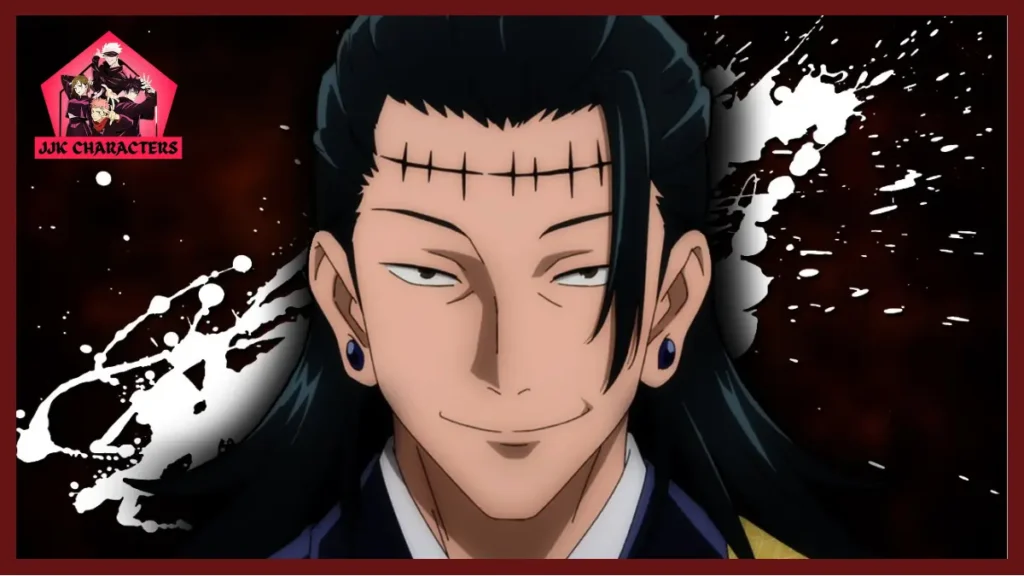
| Signature Traits | Stitched forehead scar, calm demeanor, manipulative genius, fascination with evolution and chaos |
| Goal / Motivation | To merge humanity and cursed energy into a single entity and reshape evolution itself |
| Notable Battles | Shibuya Incident, Culling Game, Fights against Yuki Tsukumo, Choso, and Tengen |
| Created By | Gege Akutami (Author of Jujutsu Kaisen) |
Who is Kenjaku in Jujutsu Kaisen
Kenjaku is the main antagonist of Jujutsu Kaisen, an ancient curse user who extends his life by transplanting his brain into new bodies, gaining their powers while keeping his own mind.
His most infamous host is Suguru Geto, whose corpse he used to command powerful curses like Mahito, Jogo, and Hanami. Over centuries, he’s possessed others such as Noritoshi Kamo and Kaori Itadori, Yuji’s mother, linking him directly to the protagonist’s birth.
Kenjaku’s manipulations shaped major events like the Shibuya Incident and the Culling Game, making him the series’ most calculating villain.
Appearance
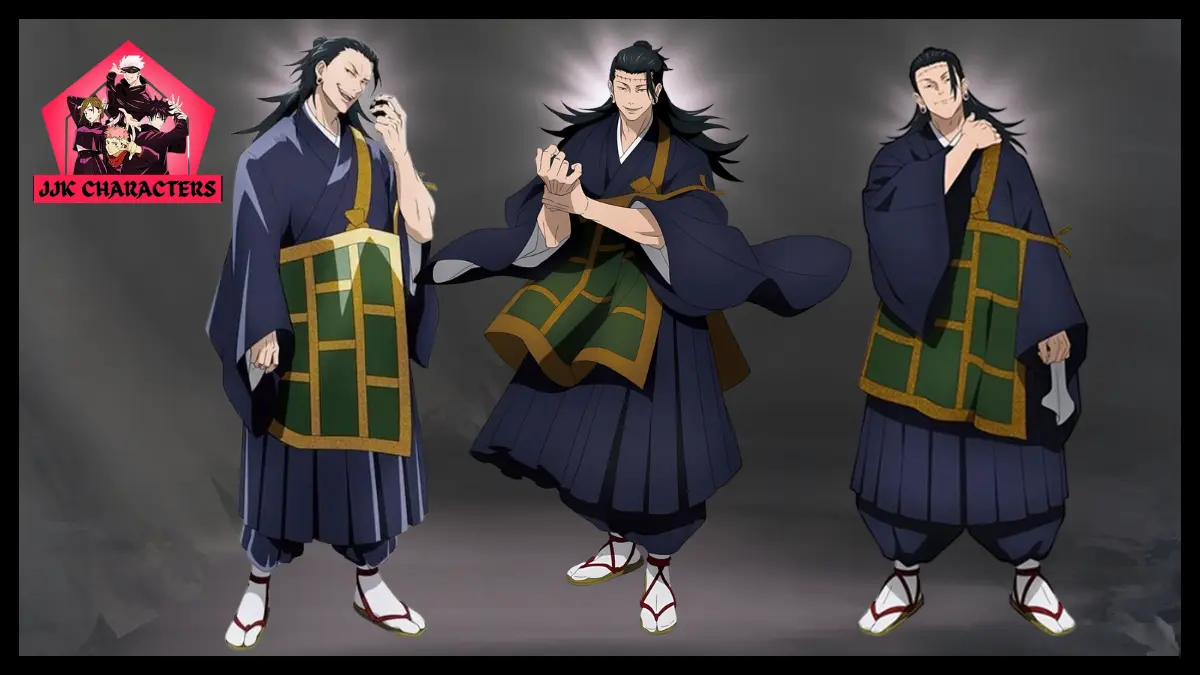
Kenjaku’s appearance changes with each host, yet one trait always remains the stitched scar across the forehead, marking where he transplants his brain. While inhabiting Suguru Geto, he retains Geto’s sharp features, long tied hair, and traditional robes, though the stitches expose the imposter beneath.
As Noritoshi Kamo, he appeared as a Meiji-era nobleman, and as Kaori Itadori, a young woman proving his technique ignores gender. His true form, a grotesque brain-like object with teeth-like ridges, symbolises his parasitic existence and mastery of identity theft.
Kenjaku JJK’s Personality
Kenjaku JJK embodies cold intellect and ruthless curiosity. He views humanity like a scientist studying microbes without hatred, but with complete detachment.
Unlike Mahito’s cruelty or Sukuna’s lust for destruction, Kenjaku pursues evolution through chaos, believing only a forced merger with Tengen can unlock humanity’s true cursed energy potential.
His motives stem from ideology, not revenge, making him eerily logical. Despite his calm, he often shows dark humour and rare flashes of frustration, hinting at an ego that occasionally cracks beneath his centuries of control.
History and Hosts
Origins and Early Life
Kenjaku’s origins remain mysterious, but records trace his existence back over a thousand years to Japan’s Heian period, the same era as Ryomen Sukuna. While Sukuna pursued power through sheer force, Kenjaku JJK sought immortality by perfecting his brain-transplant technique, allowing his consciousness to live through countless hosts.
His vast knowledge of barrier manipulation, binding vows, and forbidden rituals hints at ancient training or lineage. Mastery over relics like the Prison Realm and Tengen’s barriers suggests he either witnessed or helped shape their creation, proving his influence predates modern jujutsu society.
Former Hosts
Unnamed Early Hosts
Before his confirmed historical appearances, Kenjaku JJK likely inhabited numerous bodies whose identities are lost to time. Each host would’ve served a specific purpose gaining access to particular techniques, infiltrating specific organisations, or simply surviving through dangerous periods.
The fragmented records of ancient jujutsu clans hint at several mysterious figures who possessed inexplicable knowledge or whose actions align suspiciously with Kenjaku’s long-term goals, though concrete evidence remains elusive.
Noritoshi Kamo – The Disgraced Sorcerer
Among Kenjaku’s many vessels, his possession of Noritoshi Kamo stands out as the most infamous. During Japan’s Meiji era, he used Kamo’s identity to conduct horrific experiments, creating the Death Painting Wombs nine cursed objects born from a woman forced to bear curse-human hybrids, including Choso, Eso, and Kechizu.
These acts defined Kamo as history’s most evil sorcerer, though the real man was merely Kenjaku’s puppet. The modern Kamo clan still bears that shame, unaware their ancestor’s crimes were committed by a body-hopping manipulator.
Kaori Itadori – Yuji’s Mother
One of Kenjaku’s most disturbing acts was possessing Kaori Itadori, the mother of Yuji Itadori. After Kaori’s death, he took control of her body, entered a relationship with Jin Itadori, and conceived Yuji under calculated conditions.
Through this host, Kenjaku JJK gained the Anti-Gravity System technique and genetically engineered Yuji’s unique cursed energy traits immense strength and the ability to contain Sukuna.
Yuji’s birth, far from natural, was part of a centuries-long experiment. Yet his choice to fight for humanity defies the dark purpose behind his creation.
Suguru Geto – The Primary Modern Vessel
Kenjaku’s possession of Suguru Geto’s corpse marked his most strategic takeover. After Geto’s death at the hands of Satoru Gojo, he claimed the body and its powerful Cursed Spirit Manipulation technique, inheriting an army of curses and later recruiting Mahito, Jogo, Hanami, and Dagon.
Beyond strength, Geto’s familiar face gave Kenjaku JJK psychological leverage — Gojo’s brief hesitation during the Shibuya Incident allowed him to seal the world’s strongest sorcerer. Disturbingly, Geto’s body later resisted Kenjaku’s control, hinting that fragments of the real Geto’s will still lingered within.
Timeline of Key Events
Heian Period (794–1185 CE): Kenjaku emerges alongside Ryomen Sukuna, perfecting his brain-transplant technique to achieve immortality.
Meiji Era (1868–1912): Possesses Noritoshi Kamo and creates the Death Painting Wombs, leaving a legacy of horror in jujutsu history.
Early 2000s: Takes over Kaori Itadori, engineering Yuji Itadori’s conception with unique cursed energy traits.
2017: Claims Suguru Geto’s body, gaining Cursed Spirit Manipulation.
Oct 31, 2018: Orchestrates the Shibuya Incident, sealing Gojo Satoru and initiating the Culling Game.
Nov 2018–Present: Continues manipulating events toward his merger with Tengen.
Abilities and Powers
Overview
Kenjaku ranks among the most formidable sorcerers in Jujutsu Kaisen, not for sheer strength but for centuries of accumulated techniques and strategy.
Every body he possesses grants him a new cursed technique, which he combines with his own brain-transplant ability and vast knowledge of jujutsu history. This makes him nearly impossible to predict or counter.
His cursed energy reserves are immense, refined over a thousand years of mastery. Kenjaku JJK also understands ancient barrier arts, binding vows, and forbidden rituals, enabling him to manipulate Tengen’s barriers, wield the Prison Realm, and craft the Culling Game’s intricate rules.
Kenjaku JJK’s Cursed Techniques
Brain Transplantation (Innate Technique)
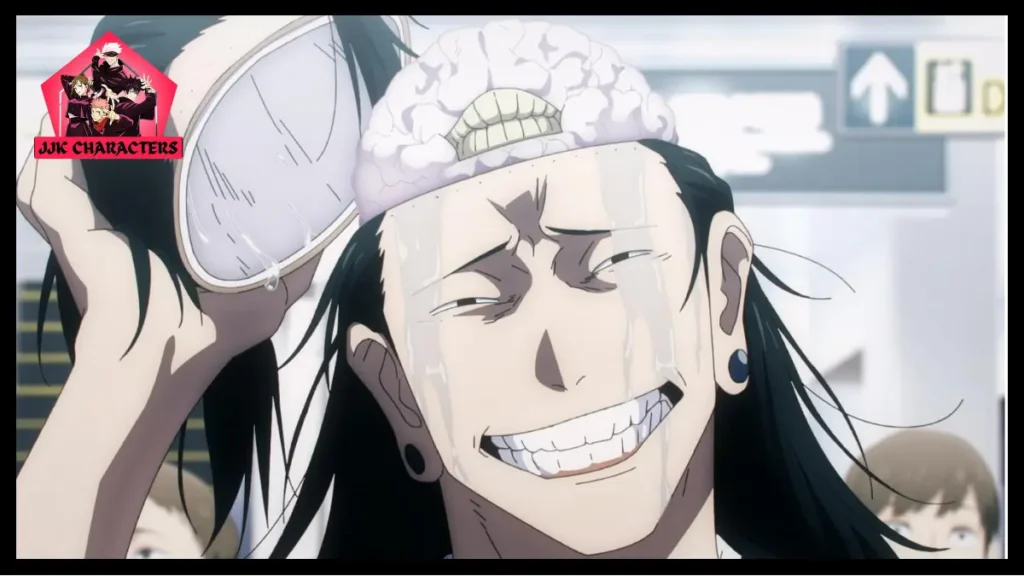
Kenjaku’s innate cursed technique allows him to transplant his brain into new bodies, fully controlling them while inheriting their abilities. The stitched scar across each host’s forehead marks this process.
Unlike ordinary possession, the transfer is permanent his consciousness completely overwrites the host. With every vessel, Kenjaku retains centuries of combat skill, strategy, and cursed knowledge, making him a living archive of sorcery and one of the most unpredictable threats in Jujutsu Kaisen.
Cursed Spirit Manipulation (Geto’s Technique)
Inherited from Suguru Geto, this technique lets Kenjaku absorb and control defeated curses, storing them as small orbs he can summon at will. Though there’s no fixed limit, commanding thousands demands immense cursed energy and precision.
Kenjaku JJK expanded Geto’s collection by recruiting special grade curses like Mahito, Jogo, and Hanami as allies rather than subordinates, proving his mastery of manipulation through ideology.
He can also extract and release curses strategically, unleashing chaos on command — as seen during the Shibuya Incident, where he flooded the city with malevolent spirits.
Maximum: Uzumaki
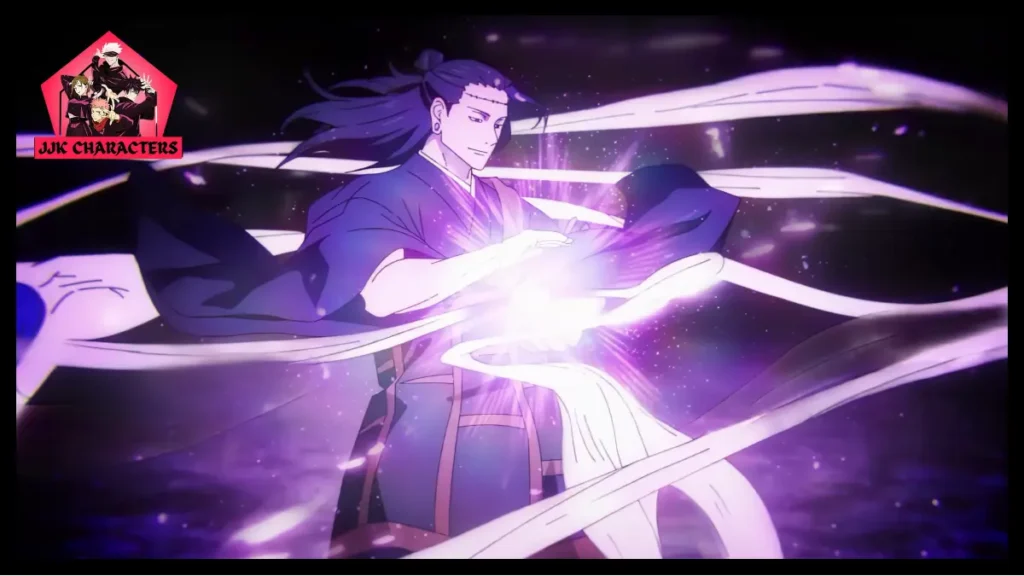
Maximum: Uzumaki is the pinnacle of Cursed Spirit Manipulation, merging multiple absorbed curses into a massive spiralling blast. Its power depends on the number and grade of curses consumed — enough to annihilate even elite sorcerers.
Beyond destruction, Uzumaki can extract a single cursed technique from the sacrificed curses for one-time use. Kenjaku JJK exploited this ability after absorbing Mahito, gaining Idle Transfiguration, one of the most versatile and terrifying powers in Jujutsu Kaisen.
Anti-Gravity System (Kaori Itadori’s Technique)
Gained through possessing Kaori Itadori, this technique lets Kenjaku manipulate gravity around himself and his targets. He uses it in battle against Yuki Tsukumo and Choso, deflecting attacks, altering trajectories, and crushing enemies under immense pressure.
When combined with Cursed Spirit Manipulation, Kenjaku JJK can restrain foes while accelerating his curses’ movements, creating an inescapable battlefield. This seamless blend of force and strategy makes him nearly untouchable in direct combat.
Idle Transfiguration (One-Time Use via Uzumaki)
After absorbing Mahito through Maximum: Uzumaki, Kenjaku gained Idle Transfiguration as a one-time technique. It allows manipulation of the soul’s form reshaping bodies, healing injuries, or transforming humans into monstrous beings.
Kenjaku used it during the Culling Game’s preparation, altering thousands of non-sorcerers’ brains to awaken cursed techniques. Unlike Mahito’s chaotic cruelty, Kenjaku JJK applied it with calculated precision, turning a terrifying power into a tool of mass evolution.
Domain Expansion: Womb Profusion
Kenjaku’s Domain Expansion, Womb Profusion, manifests as a grotesque biological realm symbolising his centuries of experimentation. Its sure-hit effect implants cursed objects into targets, weaponising his research on forced cursed energy evolution.
He attempted to use it during his battle with Yuki Tsukumo and Choso, though it was never fully unleashed. Even the threat of activation was enough to alter their strategies—proof of the overwhelming fear his domain commands.
Physical Prowess
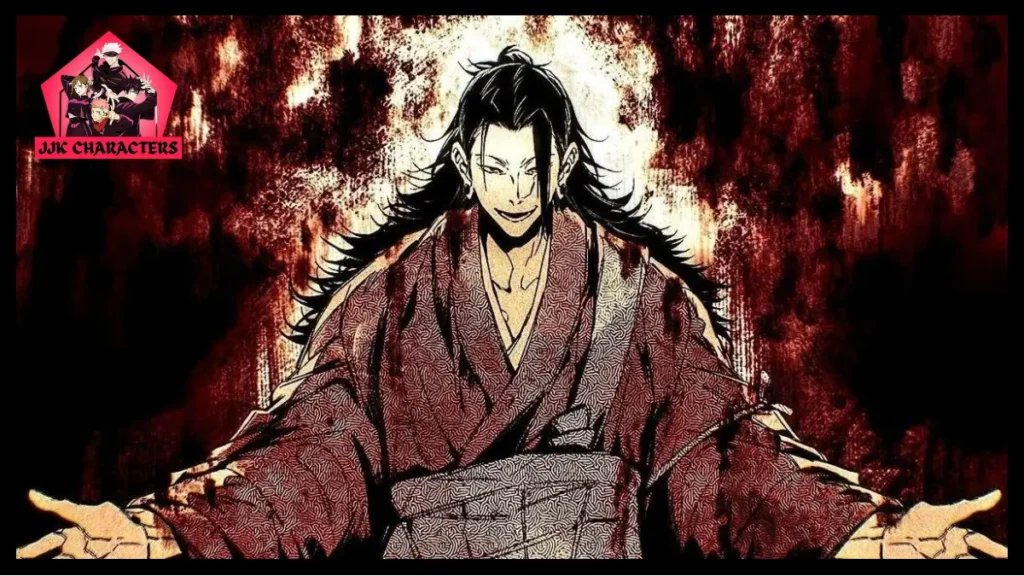
Though famed for intellect and strategy, Kenjaku JJK is formidable in close combat as well. Using Suguru Geto’s body, he maintains remarkable agility and strength through cursed energy reinforcement, matching Choso’s rapid Blood Manipulation and enduring blows from Yuki Tsukumo, a special grade sorcerer.
His stamina is exceptional he can fight multiple top-tier opponents without tiring, a result of centuries refining cursed energy control. Still, Kenjaku avoids brute-force battles, favouring range manipulation and tactical precision. When cornered, he treats combat like a calculation, not a test of strength.
Intelligence and Strategy
Kenjaku’s true weapon is his mind. His plans stretch across centuries, shaping entire societies rather than single battles. The Culling Game alone required manipulating thousands—marking non-sorcerers, creating complex rules bound by vows, and anticipating every response from modern jujutsu leaders.
During the Shibuya Incident, he executed Gojo Satoru’s sealing with perfect precision, exploiting psychological hesitation while unleashing curses to devastate Tokyo.
Kenjaku’s patience defines him; he sowed seeds generations ago the Death Painting Wombs, Yuji’s engineered birth, and his ties to Tengen knowing time itself was his ally.
Even death doesn’t halt his strategy; after being slain by Yuta Okkotsu, pre-set vows ensured his schemes endured, proving Kenjaku JJK plays a game no mortal timeline can contain.
Former Jujutsu Knowledge
Across centuries, Kenjaku has gathered unparalleled knowledge of jujutsu arts long lost to time. He understands ancient barrier formations, binding vows, and forbidden rituals that even modern sorcerers like Gojo Satoru or Yuki Tsukumo can barely comprehend.
His expertise lets him exploit relics such as the Prison Realm and manipulate Tengen’s barriers with surgical precision. This historical insight also grants him perspective on how cursed energy and humanity have evolved.
By preserving the secrets of countless eras through body-hopping, Kenjaku became a living archive of sorcery one who weaponises forgotten knowledge to shape the world’s future.
Equipment
Unlike most sorcerers, Kenjaku JJK relies on cursed objects and ritual tools rather than traditional weapons. His most notable possession is the Prison Realm, a Heian-era cursed object capable of sealing even Satoru Gojo.
It traps its target within an inescapable dimension once specific conditions are met, proving Kenjaku’s ancient knowledge and precision planning. He also manipulated cursed objects like Sukuna’s fingers, scattering them across Japan to trigger widespread chaos.
During his time as Noritoshi Kamo, he created the Death Painting Wombs, hybrid curse-human entities later revived in modern times. Beyond these, Kenjaku expertly wields barrier talismans and ritual implements for marking non-sorcerers during the Culling Game.
Rarely relying on weapons, he treats battle as strategy — using intellect, cursed techniques, and environmental control instead of brute force.
Goals and Motivations
Unlike most villains, Kenjaku JJK isn’t driven by power or vengeance but by a warped vision of evolution. His ultimate goal is to merge humanity with Tengen, erasing the boundary between humans and curses to create a new, superior form of life.
He views humanity’s cursed energy development as stagnant and believes only chaos can spark progress. The Culling Game serves this vision awakening dormant sorcerers, generating massive cursed energy, and weakening Tengen’s barriers for assimilation.
What makes Kenjaku truly dangerous is his conviction: unlike Sukuna’s lust for destruction or Mahito’s cruelty, his actions stem from ideology, not emotion. To him, suffering and death are acceptable costs in a centuries-long experiment, and even his own life is expendable if it advances his grand design.
Major Battles and Events
The Shibuya Incident
The Shibuya Incident on October 31, 2018, marked Kenjaku’s greatest strategic triumph. Coordinating an army of curses—including Mahito, Jogo, Hanami, and Choso he turned Tokyo into a battlefield of chaos.
His true objective, however, was sealing Satoru Gojo, the one man capable of halting his plans. Exploiting Gojo’s hesitation upon seeing Geto’s face, Kenjaku activated the Prison Realm, trapping the strongest sorcerer in an instant.
The aftermath crippled jujutsu society: countless deaths, exposed secrets, and political collapse. With Gojo neutralised, Kenjaku JJK unleashed curses nationwide, eroding public trust and paving the way for the Culling Game.
His actions revealed not just unmatched power, but terrifying foresight—an intellect capable of orchestrating devastation on every level.
Confrontation with Yuki Tsukumo and Choso
After the Shibuya Incident, Kenjaku JJK confronted Yuki Tsukumo and Choso as they tried to stop him from reaching Tengen. Yuki, a special grade sorcerer, wielded her Star Rage technique to manipulate mass with devastating force, while Choso fought with fury, knowing Kenjaku created the Death Painting Wombs.
Their teamwork posed a genuine threat, but Kenjaku’s adaptability proved superior. He used Anti-Gravity to counter Yuki’s mass-based strikes, Cursed Spirit Manipulation to control distance, and his unactivated Domain Expansion as psychological pressure.
Every move reflected centuries of combat mastery and emotional detachment. Despite their combined strength, both opponents fell—Yuki perished, and Choso was left broken—allowing Kenjaku to advance toward Tengen, reaffirming that even special grades struggle against his overwhelming experience and calculated precision.
The Culling Game
The Culling Game stands as Kenjaku’s grandest manipulation—an enormous ritual disguised as a survival contest. Using Idle Transfiguration, he awakened thousands of dormant sorcerers across Japan and bound them by an intricate binding vow.
Players were forced to fight or face death, earning points through kills and spending 100 points to add new rules though none could alter the Game’s core purpose. Spanning ten colonies, this self-sustaining system required no oversight; its cursed energy enforcement made the vow itself a living mechanism.
The Game generated immense cursed energy, destabilised Tengen’s barriers, scattered jujutsu forces, and revealed exceptional fighters for Kenjaku to exploit. Even when Yuji, Megumi, and Yuta tried to bend the rules, his design anticipated resistance—proving that every rebellion only deepened his control over the chaos he created.
Final Confrontation and Death
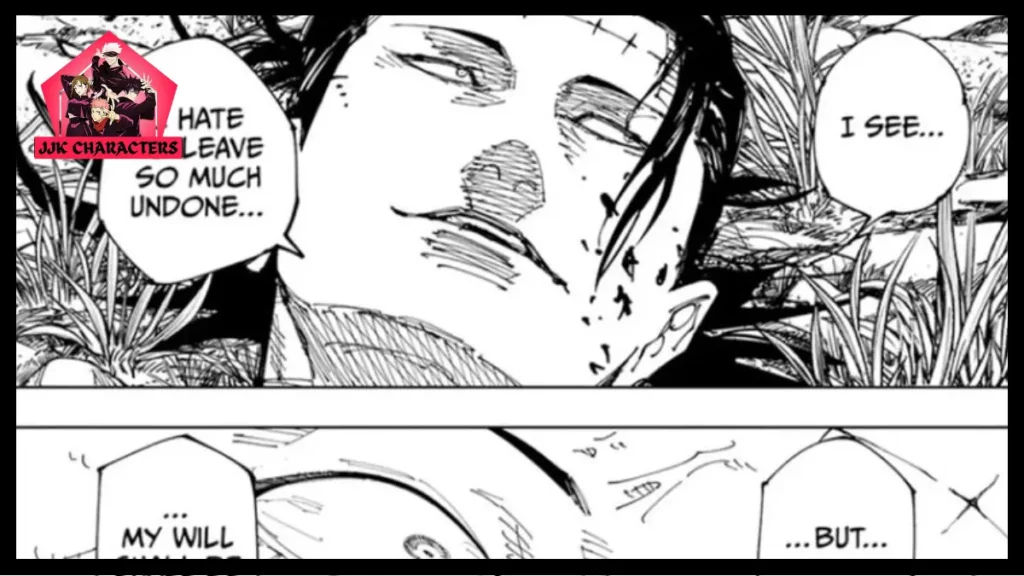
Kenjaku’s downfall came through a surprise attack by Yuta Okkotsu, exploiting the lingering will within Suguru Geto’s body. In a brief moment of rebellion, Geto’s corpse turned against its possessor, giving Yuta the opening to strike a fatal blow.
Yet even in death, Kenjaku’s influence persisted his binding vows with Sukuna and others ensured his plans continued beyond his demise.
The scene carries poetic irony: the vessel he once dominated became his undoing, proving that even after centuries of control, Kenjaku JJK couldn’t completely silence the humanity buried within his host.
Kenjaku JJK’s Relationships and Connections
Ryomen Sukuna
Kenjaku’s connection with Ryomen Sukuna is a calculated alliance between two ancient forces born of the Heian era. Though both transcend modern sorcery, their philosophies differ Sukuna craves destruction for its own sake, while Kenjaku seeks evolution through chaos.
Their partnership, bound by binding vows, serves mutual goals: Kenjaku aided Sukuna’s revival, while Sukuna’s immense power deterred interference from other special grades.
Kenjaku even engineered Yuji Itadori’s birth as Sukuna’s vessel and scattered his fingers across Japan to spread instability. Despite mutual distrust, Kenjaku JJK respects Sukuna’s authenticity as a relic of true Heian power an equal rather than a pawn—making their cooperation one of necessity, not loyalty.
Yuji Itadori
Kenjaku’s link to Yuji Itadori is one of his most disturbing acts. By possessing Kaori Itadori and conceiving Yuji intentionally, he engineered a vessel capable of housing Sukuna a living experiment born from manipulation, not love.
Yet Yuji’s compassion and defiance turned that design upside down. Everything he stands for—valuing lives, rejecting utilitarian cruelty directly opposes Kenjaku’s ideology of sacrifice for evolution. Their conflict is more than physical; it’s philosophical.
Kenjaku views Yuji as data that deviated from its purpose, not as a son or failure. His cold detachment creating life only to discard it—reveals a horror deeper than violence: the complete absence of humanity.
Satoru Gojo
Kenjaku’s link to Satoru Gojo is rooted in cruelty and calculation. By possessing Suguru Geto, Gojo’s closest friend, Kenjaku JJK gained the leverage needed to exploit the one weakness in Gojo’s near-perfect defence his compassion.
That brief hesitation during the Shibuya Incident allowed Kenjaku to activate the Prison Realm and seal the strongest sorcerer alive. To Kenjaku, Gojo embodied the pinnacle of a stagnant jujutsu system: powerful, yet bound by moral and emotional limits.
While he respects Gojo’s unmatched strength, he ultimately views it as proof of humanity’s evolutionary ceiling. Using Geto’s body against him showcased Kenjaku’s ruthlessness—his readiness to weaponise love, memory, and grief as easily as any cursed technique.
Tengen
Tengen is both Kenjaku’s oldest acquaintance and ultimate target. As an immortal being who sustains Japan’s barrier network, Tengen represents stability—the very principle Kenjaku seeks to overturn. Their bond blends ancient familiarity with absolute opposition.
Kenjaku JJK aims to merge with Tengen to access their evolved, near-spiritual state and dismantle the barriers anchoring jujutsu society.
Both have lived for centuries, mastering the deepest laws of cursed energy, yet they embody opposite philosophies: Tengen preserves order; Kenjaku enforces change through chaos.
Their dynamic mirrors a cosmic balance guardian versus saboteur each believing their path ensures humanity’s survival, though by utterly different means.
Choso
Choso’s connection to Kenjaku JJK is one of tragedy and rejection. As one of the Death Painting Wombs created during Kenjaku’s time as Noritoshi Kamo, Choso technically considers him a parent—though that bond exists only in name.
When Choso learned the truth, realising his and his brothers’ births were products of cruel experimentation, grief and fury consumed him. For Kenjaku, the revelation meant nothing; he acknowledged Choso’s existence with scientific detachment, devoid of even mockery.
To him, Choso and his siblings were simply data from a successful experiment. Their encounters expose Kenjaku’s inhumanity—he can create life, yet remains incapable of understanding love, loss, or the emotional weight of creation.
Uraume
Uraume, the devoted servant of Ryomen Sukuna, maintains a rare relationship of mutual respect with Kenjaku JJK. Both are remnants of the Heian era, sharing ancient knowledge and a pragmatic understanding of power.
Their alliance functions smoothly because each recognises the other’s purpose—Uraume serves Sukuna’s resurrection, while Kenjaku’s schemes provide the conditions for it.
Unlike his manipulation of modern sorcerers, Kenjaku JJK treats Uraume with professional courtesy, aware that deceit would be futile against Sukuna’s most trusted follower.
Their partnership reflects a quiet acknowledgement between equals: two ancient forces cooperating not out of loyalty, but out of shared vision and the efficiency born of timeless experience.
Legacy and Impact
Kenjaku’s influence outlived him, reshaping the foundation of jujutsu society. The Culling Game awakened thousands of new sorcerers, permanently expanding the sorcerer population and destabilising the balance between humans, curses, and governments.
His creation of the Death Painting Wombs blurred the line between species, forcing society to question what defines humanity. The sealing of Gojo Satoru exposed the system’s fragility, revealing over-reliance on individual power and institutional corruption.
Beyond actions, Kenjaku’s ideology proved transformative he showed that jujutsu’s structures weren’t natural but constructed, and therefore vulnerable to change.
His attempted merger with Tengen proved evolution through cursed energy was possible, planting dangerous ideas for future generations. Even in death, Kenjaku’s legacy endures through chaos, ideological unrest, and irreversible transformation—a world forever altered by one man’s thousand-year experiment.
Fan Theories & Future Predictions
The Jujutsu Kaisen fandom continues to speculate about Kenjaku’s lingering influence and unfinished plans.
The Incomplete Merger Theory suggests his death didn’t fully stop the merger with Tengen the ritual’s cursed energy could still evolve independently, posing a new, environmental threat.
The Backup Host Theory argues Kenjaku likely prepared contingency bodies to preserve his consciousness, meaning his “death” may only be temporary.
The Hidden Student Theory imagines a disciple unknowingly continuing his work through dormant binding vows or subconscious conditioning.
The Heian Connection Theory links Kenjaku more deeply to Tengen and the Prison Realm’s origins, implying ancient personal ties.
The Cursed Energy Evolution Theory questions whether Kenjaku’s ideology was partly right—perhaps evolution through cursed energy is inevitable, forcing future sorcerers to face moral dilemmas.
The Yuji Connection Theory speculates that Yuji’s unique resilience and physicality stem from Kenjaku’s manipulation, hinting at hidden potential.
The Binding Vow Cascade Theory proposes Kenjaku left posthumous vows—automatic “dead man’s switches” to keep his influence alive.
The Geto’s Will Theory interprets Geto’s body rebelling against Kenjaku as proof of trapped consciousness, raising disturbing questions about his past hosts.
Looking ahead, fans expect major arcs to focus on:
- Integrating awakened sorcerers from the Culling Game into society.
- Tengen’s uncertain fate, and the global impact if the barriers fail.
- Kenjaku’s forbidden research, which may inspire new villains.
- Choso’s evolution, as he reconciles his grief and identity as Kenjaku’s creation.
Even in death, Kenjaku JJK’s shadow looms over Jujutsu Kaisen—his ideas, experiments, and consequences ensuring that his story, and chaos, continue.
Trivia
Name Origin: Kenjaku (羂索) means “binding rope” or “snare,” symbolising his manipulative nature and ability to entrap others in long-term schemes. The name was revealed late in the series, heightening the shock after fans knew him only as “Geto.”
Heian Period Survivor: Both Kenjaku JJK and Sukuna hail from the Heian period (794–1185 CE), the golden age of jujutsu, explaining their overwhelming power compared to modern sorcerers.
Signature Stitches: The stitches across his hosts’ foreheads became iconic symbols of possession. Manga readers spotted these clues on “Geto” long before the anime confirmed his true identity.
Voice Actor Detail: In the anime, Takahiro Sakurai subtly differentiates between genuine Geto and Kenjaku’s tone, hinting at possession even before the reveal.
Author’s Inspiration: Creator Gege Akutami drew from body-horror themes and questions of identity—if a brain is transplanted, does the self remain? Kenjaku is this concept personified.
The Fake Geto Mystery: Attentive readers noticed “Geto’s” odd behaviour at the end of Jujutsu Kaisen 0, foreshadowing the eventual twist of possession.
Cross-Century Schemer: Unlike typical “ancient evils,” Kenjaku’s plans genuinely span centuries, manipulating countless generations to shape the modern world.
The Brain Design: His grotesque, tooth-rimmed brain form reflects parasitic horror and the violation of natural limits.
Host Compatibility: Not every body can contain him; his technique requires compatible hosts, explaining his deliberate vessel selection.
No Fixed Form: Constantly changing bodies means Kenjaku has no true appearance—only his ideology and actions define his identity.
References
Throughout this article, information has been drawn from:
- Jujutsu Kaisen manga by Gege Akutami (Chapters 1-236+), published in Weekly Shōnen Jump
- Jujutsu Kaisen anime produced by MAPPA (Seasons 1-2)
- Jujutsu Kaisen 0 (prequel film), which establishes Geto’s death and sets up Kenjaku’s possession
- Official character databooks released by Shueisha, providing canonical details about techniques and histories
- Gege Akutami interviews discussing character creation and thematic intentions
All information presented reflects canonical material from official sources. Fan theories are clearly labelled as speculation rather than confirmed fact.
Frequently Asked Questions
Why did Kenjaku kill Mahito?
Kenjaku didn’t kill Mahito but absorbed him using Geto’s Cursed Spirit Manipulation to gain the Idle Transfiguration technique for the Culling Game.
Is Kenjaku a curse?
No, Kenjaku is an ancient sorcerer (1000+ years old) who survives by transplanting his brain into different host bodies.
Does Kenjaku take over Gojo?
No, Kenjaku takes over Suguru Geto’s body, not Gojo. Geto’s body is his current vessel.
Is Kenjaku Yuji’s mom?
Yes, Kenjaku possessed Kaori Itadori’s body (Yuji’s mother) and gave birth to Yuji as part of his master plan.
How old is Kenjaku?
Over 1,000 years old, dating back to the Heian Era, making him one of the oldest characters in JJK.
Who killed Kenjaku?
Yuta Okkotsu killed Kenjaku by decapitating him in a surprise attack during the Shinjuku Showdown arc.
How did Kenjaku die?
Yuta ambushed and beheaded him while Kenjaku was distracted, ending his millennium-long existence.
Why did Mahito attack Kenjaku?
Mahito didn’t attack Kenjaku; Kenjaku absorbed Mahito after Shibuya using Cursed Spirit Manipulation to utilize his powers.
Conclusion
Kenjaku stands as Jujutsu Kaisen’s most intellectually dangerous antagonist—a millennium-old strategist whose patience dwarfs human comprehension. Through possessing Noritoshi Kamo, Kaori Itadori, and Suguru Geto, he’s orchestrated century-spanning schemes that fundamentally destabilised jujutsu society.
His creation of the Death Painting Wombs, engineering of Yuji’s birth, and design of the Culling Game weren’t acts of malice but calculated steps toward forced cursed energy evolution.
What makes Kenjaku JJK truly unsettling isn’t his mastery of Cursed Spirit Manipulation or Idle Transfiguration it’s his complete moral detachment. He doesn’t hate humanity; he simply views individuals as irrelevant variables in species-wide transformation.
Even in death, his influence persists through awakened sorcerers and binding vows that continue reshaping reality.
Kenjaku’s legacy isn’t merely destruction it’s irreversible destabilisation. He proved that intelligence divorced from empathy, scaled across centuries, can permanently transform worlds. Whether his philosophy about stagnation contained uncomfortable truths remains Jujutsu Kaisen’s most challenging question.